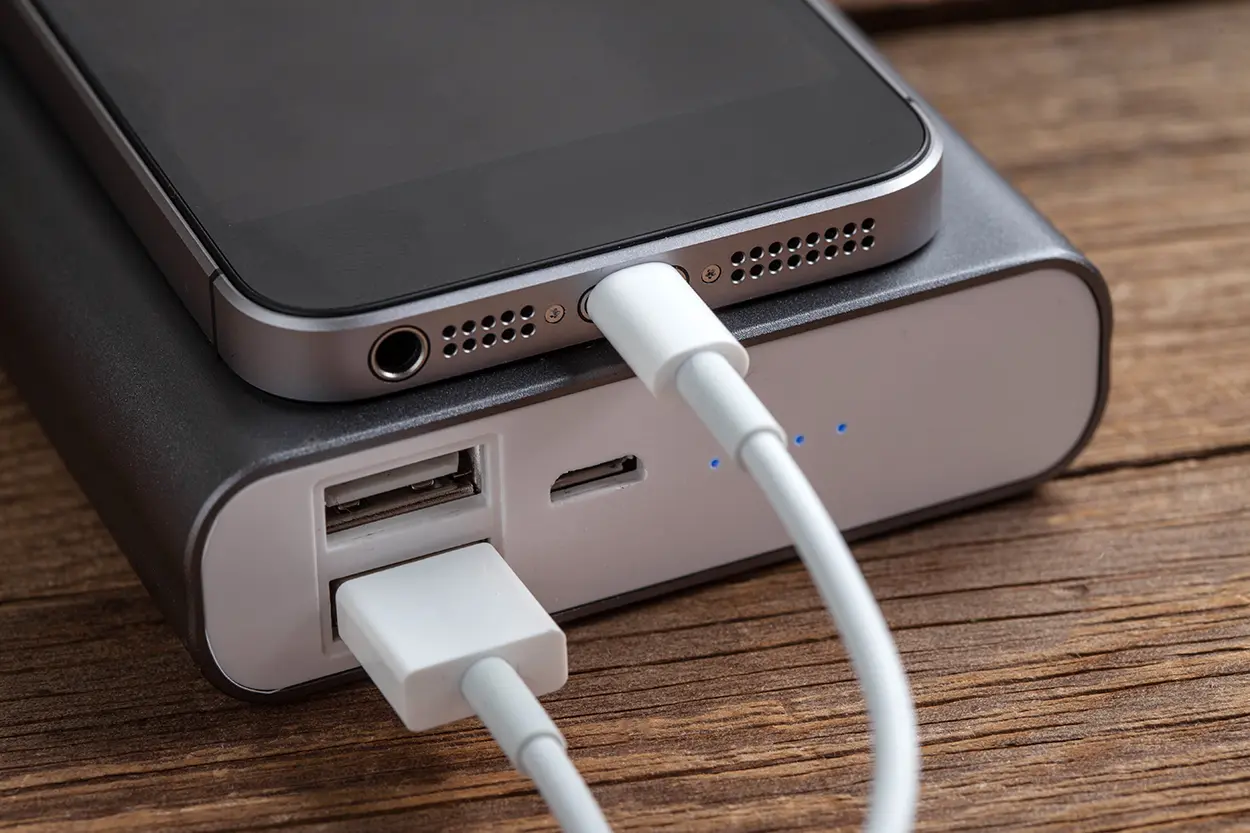
Choosing a portable power bank means balancing capacity, size, output speed, and airline compliance against how you actually plan to use it. With dozens of specifications listed on every product page, it is easy to either overpay for capacity you will never use or end up with a power bank too weak for your devices. This guide breaks down exactly what to check before buying, including the travel rules that catch many buyers off guard. I’ve swapped through more power banks than I’d like to admit while figuring out what I actually needed for travel, and the honest answer is that the biggest number on the box is rarely the right one to chase.
Start With How You Will Actually Use It
Before comparing specifications, define your primary use case. A daily commuter topping off a phone needs a very different power bank than someone keeping a laptop and phone charged during a full day of travel, or someone stocking an emergency kit for power outages. Matching capacity and features to actual use prevents both overspending and disappointment.
How to Choose a Portable Power Bank: Key Specifications
1. Capacity (mAh or Wh)
Capacity is usually listed in milliamp-hours (mAh), though watt-hours (Wh) is the measurement that matters for travel rules. A typical smartphone battery holds roughly 3,000 to 5,000 mAh, so a 10,000 mAh power bank can generally provide one to two full phone charges, accounting for energy lost in conversion. Larger 20,000 to 30,000 mAh power banks can charge phones multiple times or provide a partial charge to a laptop, but come with added weight and size. In my experience, the jump from a 10,000 mAh to a 20,000 mAh bank is noticeable in a jacket pocket, and I ended up going back to the smaller one for everyday carry once I realized I was only ever topping off a phone, not a laptop.
2. Output Power (Watts)
Output wattage determines how quickly a power bank can charge your device. Charging a laptop or fast-charging a modern phone typically requires a higher-wattage output than older 5-watt or 10-watt power banks provide. Check your device’s expected charging wattage and match the power bank’s maximum output accordingly.
3. Number and Type of Ports
If you need to charge multiple devices at once, check both the number of ports and whether output is shared or independent per port — some power banks reduce total output when multiple devices are connected simultaneously. USB-C ports with higher wattage support are increasingly standard for fast charging across phones, tablets, and some laptops.
4. Physical Size and Weight
Higher capacity generally means more size and weight. If the power bank is meant for daily carry in a bag or pocket, weigh this tradeoff carefully rather than defaulting to the highest capacity available.
5. Pass-Through Charging
Pass-through charging allows a power bank to charge a connected device while it is itself being charged from a wall outlet. This feature is useful for overnight setups where you want both the power bank and your phone ready by morning.
6. Safety Certifications
Look for recognized safety certifications on the product listing or packaging, which indicate the battery has passed independent testing for basic electrical safety standards. Avoid unbranded or uncertified power banks, particularly for higher-capacity models where battery failure risks are greater. A mistake I made early on: I bought an unbranded high-capacity bank from a marketplace listing because it was cheap, and it ran noticeably warm just charging a phone — I stopped using it and haven’t bought an uncertified one since.
The Airline Rule Most Buyers Miss
If you plan to travel with your power bank, capacity limits are not just a convenience factor — they are a federal safety requirement. The Transportation Security Administration specifies that portable chargers and power banks containing lithium-ion batteries must be packed in carry-on bags only, and are prohibited in checked luggage entirely (TSA: Power Banks).
The Federal Aviation Administration further specifies capacity limits for spare lithium batteries carried onto flights: batteries are generally allowed without special approval up to 100 watt-hours, batteries between 101 and 160 watt-hours require airline approval and are limited to two spares per passenger, and batteries above 160 watt-hours are not permitted (FAA PackSafe: Lithium Batteries). Most consumer power banks fall well under the 100 watt-hour threshold, but very high-capacity models marketed for laptops or camping can approach or exceed that limit, so check the watt-hour rating printed on the device before flying with it.
Converting mAh to Watt-Hours
Many power banks list capacity only in mAh. To estimate watt-hours, multiply the mAh rating by the battery voltage (commonly 3.7 volts for lithium-ion cells) and divide by 1,000. A 20,000 mAh power bank at 3.7 volts equals roughly 74 watt-hours — comfortably under the 100 watt-hour carry-on limit for most travelers. When I fly, I do this math before I pack, not at the security line — I’ve found the watt-hour rating is usually printed in small text on the back of the unit itself, not always on the box.
Matching a Power Bank to Common Use Cases
Daily Commuting
A compact 5,000 to 10,000 mAh power bank with a single fast-charging port typically covers one to two phone top-ups without adding much bulk.
Multi-Day Travel
A 20,000 mAh power bank with multiple ports and pass-through charging balances capacity against airline carry-on limits and daily carry comfort.
Home Emergency Preparedness
For power outage readiness rather than travel, higher-capacity portable power stations — a larger category than standard power banks — may better serve the goal of running small appliances or medical devices, though these typically are not designed for air travel due to their capacity.
Common Mistakes When Buying a Power Bank
Buying Based on mAh Alone Without Checking Output
A high-capacity power bank with low output wattage will still charge devices slowly. Always check both figures together rather than assuming a large mAh number guarantees fast charging.
Ignoring Cable Compatibility
Some power banks include a captive cable, while others require you to supply your own. Confirm the connector type — USB-C, USB-A, or both — matches the cables and devices you already own to avoid needing additional adapters.
Overlooking Charge Retention Over Time
Lithium-ion batteries naturally lose some charge while sitting unused. If you plan to store a power bank for emergencies rather than daily use, check whether the manufacturer specifies a self-discharge rate, and plan to top it off periodically rather than assuming it will hold a full charge indefinitely.
Final Checklist Before You Buy
- Match capacity to your actual charging needs, not the highest number available.
- Confirm output wattage supports fast charging for your specific devices.
- Check the number and type of ports against how many devices you charge simultaneously.
- Verify the watt-hour rating if you plan to fly with the power bank.
- Choose a model with recognized safety certification rather than an unbranded option.
Frequently Asked Questions
Can I bring any size power bank on a plane?
No. The TSA and FAA require power banks to be carried in carry-on baggage only, with capacity limits of generally up to 100 watt-hours without airline approval, and a maximum of two additional spares between 101 and 160 watt-hours with approval.
Is a higher mAh rating always better?
Not necessarily. Higher capacity adds size and weight, and most everyday users do not need the largest available capacity. Match the rating to your realistic charging needs instead of maximizing the number alone.
What is pass-through charging and do I need it?
Pass-through charging lets you charge a device from the power bank while the power bank itself is plugged into a wall outlet. It is useful if you want to charge both simultaneously overnight, but is not essential for basic use.
Written by Sarah Whitfield, BloggedTopics Travel & Lifestyle Editor. Last reviewed and updated August 23, 2026.
