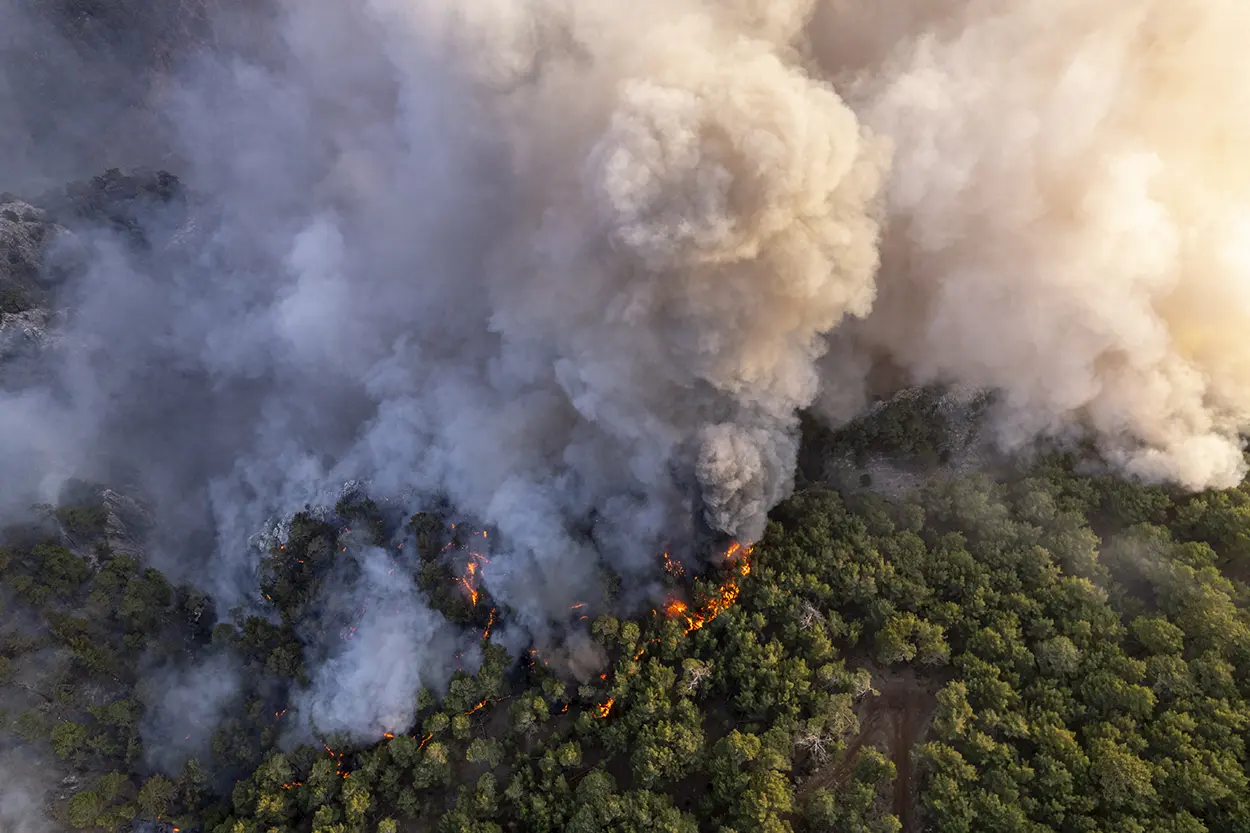
A wildfire smoke home checklist helps you prepare your indoor space before smoke arrives, rather than reacting once the sky has already turned hazy and air quality alerts are in effect. I put this list together after a smoke event rolled into my own region from a fire burning several states away — I hadn’t expected to need it, since the fire itself was nowhere near me, and I scrambled to buy a portable air cleaner during a week when every local store was sold out. Wildfire smoke can travel hundreds of miles from the actual fire, meaning even households far from active flames may need to take precautions during smoke events. This checklist focuses strictly on practical, non-medical home preparation steps drawn from official environmental and public health guidance.
Why Wildfire Smoke Preparation Matters Even Far From the Fire
Wildfire smoke consists of a mixture of gases and fine particles that can affect air quality far beyond the immediate fire area. According to the Centers for Disease Control and Prevention, wildfire smoke can irritate the eyes, nose, throat, and lungs, and reducing exposure — particularly by staying indoors with cleaner indoor air during smoke events — is a primary recommended strategy for the general public (CDC: Safety Guidelines for Wildfires and Wildfire Smoke). This article focuses only on home and preparedness steps; it is not medical guidance, and anyone with specific health concerns during a smoke event should consult a qualified healthcare provider.
Wildfire Smoke Home Checklist: Before a Smoke Event
1. Know Where to Check Air Quality
AirNow.gov, a partnership among federal agencies including the EPA, provides real-time Air Quality Index (AQI) readings and a Fire and Smoke Map that shows current conditions across North America. Bookmark this resource and check it regularly during fire season in your region (AirNow.gov: Wildfires).
2. Stock a Supply of High-Efficiency Filters
If your home has central air conditioning or forced-air heating, keep extra high-efficiency filters on hand, ideally MERV 13 or higher if your system is rated to support them, so you can upgrade filtration quickly when smoke is forecast. In my experience, checking the filter rating printed on the cardboard frame takes thirty seconds and saves you from buying the wrong size in a panic once smoke is already in the forecast.
3. Identify a “Clean Room” in Your Home
Choose one room — ideally with few windows and doors that seal well — to serve as a designated clean air space during heavy smoke events. This is the room where you will concentrate a portable air cleaner and spend the most time if outdoor air quality worsens significantly.
4. Have a Portable Air Cleaner Ready
A portable air cleaner with a HEPA filter, sized appropriately for your clean room, can meaningfully reduce indoor particulate levels during a smoke event. Check the manufacturer’s room-size rating before purchase to ensure it is adequate for the space you intend to use it in. A mistake I made the first time: I bought a unit rated for a room half the size of my actual bedroom because it was the only one left in stock, and I could tell within a day that it wasn’t keeping up — it’s worth ordering the right size in advance rather than settling for whatever’s available once smoke is already in the air.
5. Weatherstrip Doors and Windows
Small gaps around doors and windows let smoke infiltrate even a closed-up house. Basic weatherstripping addresses this at low cost and also improves general home energy efficiency, making it a dual-purpose preparation step.
Wildfire Smoke Home Checklist: During a Smoke Event
6. Keep Windows and Doors Closed
During active smoke events, keep windows and doors closed as much as possible, even if temperatures are uncomfortable, since outdoor air introduces particulate matter directly into your living space.
7. Set HVAC Systems to Recirculate
If your air conditioning system has a fresh air intake option, switch it to recirculate mode during smoke events to avoid actively pulling smoky outdoor air inside, and ensure filters are clean enough to maintain good airflow (CDC: Safety Guidelines for Wildfires and Wildfire Smoke).
8. Avoid Adding Indoor Pollution Sources
During a smoke event, avoid burning candles, using gas stoves, smoking indoors, or vacuuming, since these activities add additional particulate matter or stir up settled particles at a time when indoor air quality is already under strain.
9. Limit Strenuous Indoor Activity in Poorly Ventilated Spaces
Even indoors, if smoke has infiltrated a space, reducing physical exertion in that room can lower the amount of air — and particulate matter — you breathe in over a given period.
10. Monitor Official Alerts, Not Just Visual Smokiness
Visible haze is not always proportional to actual particulate levels, and some hazardous smoke events are less visually obvious than others. Rely on official AQI readings from AirNow.gov rather than judging air quality by sight alone (AirNow.gov: Wildfires).
Wildfire Smoke Home Checklist: After a Smoke Event
11. Ventilate Once Air Quality Improves
Once official readings confirm outdoor air quality has returned to acceptable levels, open windows and doors to flush out any smoke that infiltrated during the event and refresh indoor air. I’ve learned to resist the urge to do this the moment the sky visually clears — checking the actual AQI number first has kept me from opening windows too early more than once.
12. Clean Surfaces That May Have Collected Ash or Particulate Residue
Wipe down surfaces, especially in rooms that were not part of your sealed clean space, since fine particulate matter can settle on furniture and floors during extended smoke events.
13. Replace Air Filters After Heavy Smoke Exposure
HVAC and portable air cleaner filters that were in heavy use during a smoke event may need earlier replacement than their standard schedule, since they likely captured a higher-than-normal particulate load.
Building Your Wildfire Smoke Preparedness Kit
- Extra high-efficiency HVAC filters
- A properly sized portable air cleaner with a HEPA filter
- Weatherstripping materials for doors and windows
- A bookmark or app for AirNow.gov’s Air Quality Index and Fire and Smoke Map
- A designated clean room identified in advance
Turning This Checklist Into a Seasonal Habit
Wildfire smoke events have become more common in many regions, and preparing your home in advance — rather than during an active smoke advisory — makes the response far less stressful. Checking your filters, identifying your clean room, and knowing where to find reliable air quality data are steps you can complete well before smoke season begins, using them as a seasonal home maintenance routine rather than a last-minute scramble.
Frequently Asked Questions
Where can I check real-time wildfire smoke conditions?
AirNow.gov, maintained through a partnership of federal agencies including the EPA, provides real-time Air Quality Index readings and a Fire and Smoke Map covering North America.
Do I need a whole-home air purifier for wildfire smoke?
Not necessarily. Many households manage smoke events effectively by sealing and filtering a single designated clean room rather than purifying an entire home, which can be more cost-effective and just as protective for daily living needs.
Should I wear a mask indoors during a wildfire smoke event?
Indoor masking needs depend on how much smoke has infiltrated your home and your individual health considerations. This is a personal and potentially medical decision, so consult official guidance and, if you have health concerns, a qualified healthcare provider.
Written by Sarah Whitfield, BloggedTopics Travel & Lifestyle Editor. Last reviewed and updated August 9, 2026.
