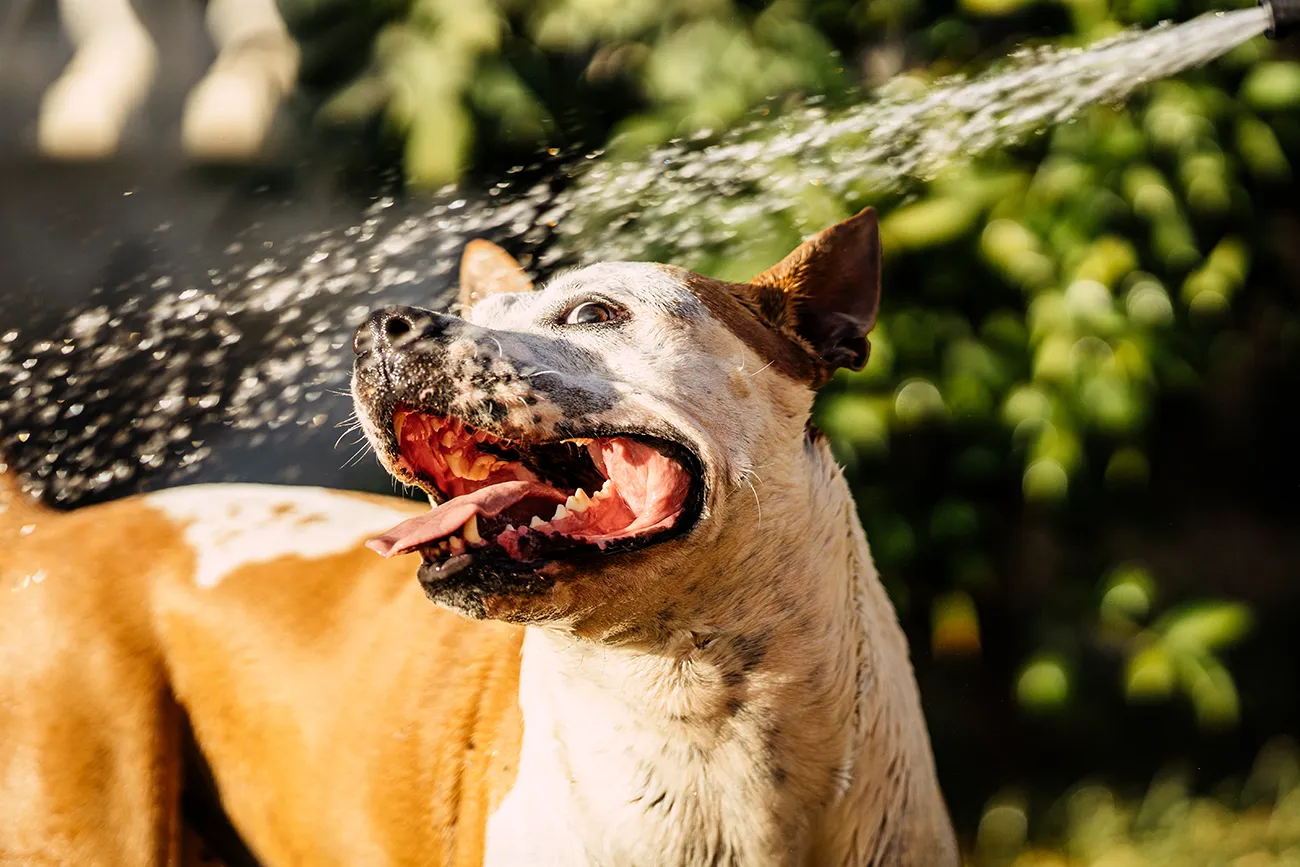
Dog heat safety is critical knowledge for every dog owner, particularly during summer months when temperatures rise quickly and heatstroke can develop in minutes. Dogs are far less efficient at cooling themselves than humans — they cool primarily through panting and limited sweating through their paw pads, which makes them vulnerable in ways that are easy to underestimate. I have owned dogs for most of my adult life, and the summer I nearly lost a Lab to heat exhaustion after what I thought was a reasonable midday walk changed how seriously I take this topic. This guide covers how to recognize heat-related distress, practical prevention strategies, and what to do if your dog overheats.
How Dogs Regulate Temperature (and Why They Struggle)
Understanding the basic biology helps explain why dogs are so vulnerable to heat. Humans sweat across nearly the entire skin surface, which allows efficient evaporative cooling. Dogs sweat only through their paw pads and cool primarily by panting — moving air over moisture in the mouth, throat, and respiratory tract. When the air temperature approaches body temperature (dogs run between 101–102.5°F normally), panting becomes less effective, and body temperature can rise rapidly.
Factors that make a dog more vulnerable to heat:
- Brachycephalic breeds — flat-faced dogs like Bulldogs, Pugs, Boxers, Shih Tzus, and French Bulldogs have restricted airways and cannot pant as efficiently. They are at significantly higher risk of heatstroke.
- Thick double coats — breeds like Huskies, Malamutes, Chow Chows, and Saint Bernards retain heat. I learned this firsthand fostering a Husky mix one summer; she needed far more shade and far shorter walks than any of my other dogs, even on days that did not feel especially hot to me.
- Age extremes — puppies and senior dogs are less capable of regulating temperature.
- Obesity — extra body mass generates more heat and impairs cooling.
- Prior heatstroke — dogs that have experienced heatstroke once are more susceptible to it again.
- Underlying health conditions — heart disease, respiratory issues, and certain medications can impair heat tolerance.
Recognizing Heat-Related Illness in Dogs
Catching heat stress early gives you time to act before it becomes a life-threatening emergency. Signs progress in severity:
Early Warning Signs (Heat Stress)
- Heavy, rapid panting that does not slow when resting
- Excessive drooling
- Restlessness or seeking cool surfaces
- Slowing down during activity or reluctance to continue
Signs of Heatstroke (Emergency)
- Bright red or very pale gums
- Thick, sticky saliva
- Vomiting or diarrhea, sometimes bloody
- Weakness, stumbling, or collapse
- Glazed eyes, confusion, or unresponsiveness
- Seizures
Heatstroke is a life-threatening emergency. If you observe these signs, begin cooling immediately and get to a veterinarian as fast as possible — do not wait to see if the dog improves on its own.
The Parked Car Rule
Never leave a dog in a parked car in warm weather — even with the windows cracked. The temperature inside a parked car escalates far more quickly than most people realize. On a 70°F day, the interior temperature can reach 89°F in 10 minutes and 104°F in 30 minutes. On an 85°F day, interior temperatures can exceed 120°F within 30 minutes.
The American Veterinary Medical Association (AVMA) maintains detailed information on the dangers of hot cars for pets, including state-by-state laws about leaving animals in vehicles. Their hot car safety page for pets is a must-read for any dog owner who travels with their dog during summer. The American Red Cross pet safety resource also covers heat safety protocols and emergency preparedness for pet owners.
Safe Exercise in Hot Weather
Dogs do not self-regulate exercise as well as humans — a dog will run until it collapses rather than stop voluntarily. Exercise management in heat falls entirely on the owner:
- Walk early or late — exercise before 9 a.m. or after 7 p.m. in summer to avoid peak heat. Midday and early afternoon are the most dangerous windows.
- Test the pavement before walking — asphalt and concrete can reach 140–160°F on hot sunny days, causing painful paw burns in seconds. Press the back of your hand to the surface for five seconds; if it is too hot for your hand, it is too hot for your dog’s paws. Stick to grass, use dog booties, or walk in shaded areas. In my experience, this test is easy to skip when you are in a hurry, but I now do it reflexively at the door before every summer walk, because I have seen how fast a dog can start limping on hot asphalt.
- Shorten the duration — on days over 80°F, keep active exercise to short sessions. Swimming or water activities are ideal alternatives.
- Watch your dog, not a clock — even a “scheduled” 30-minute walk should end early if your dog is panting heavily or slowing down significantly.
Hydration Strategies
Dogs need constant access to fresh, cool water, especially in hot weather. Practical strategies:
- Keep a water bowl in every area of the house where the dog spends time.
- Carry a collapsible water bowl and a water bottle on every walk.
- Refresh water throughout the day — dogs are less likely to drink stale, warm water.
- Add ice cubes to the bowl on hot days.
- Frozen treats (ice cubes made from low-sodium broth, plain frozen yogurt, or sliced dog-safe fruits like blueberries) provide hydration and cooling simultaneously.
Keeping Dogs Cool Indoors and Outdoors
On days too hot for extended outdoor activity, focus on keeping your dog comfortable at home:
- Air conditioning — the most effective indoor cooling. Do not rely on fans alone for dogs; unlike humans, dogs cool inefficiently through evaporation from skin, so fans are less effective for them than for people.
- Cooling mats — gel-filled or water-activated cooling mats provide a cool surface for dogs to lie on. These work well as supplemental options even when AC is available.
- Wet towels — cool (not ice-cold) wet towels placed on the neck, armpits, and groin area help lower body temperature.
- Kiddie pools — many dogs enjoy wading in a shallow plastic pool in the yard. Refresh the water daily.
- Shade and airflow — if your dog is outdoors for any period, ensure shaded areas with good airflow. Direct sun is dangerous even for short periods on very hot days.
What to Do If Your Dog Overheats
If you suspect heatstroke, every minute matters. Follow these steps while someone calls your veterinarian or an emergency animal hospital:
- Move the dog immediately to shade or into an air-conditioned space.
- Apply cool (not ice cold) water to the dog’s body, especially the neck, armpits, groin, and paw pads. Cold water can cause blood vessel constriction and slow cooling.
- Use a fan to increase evaporation if available.
- Offer small sips of cool water if the dog is conscious and able to swallow — do not force water.
- Transport to a veterinarian immediately, even if the dog seems to be recovering. Internal organ damage from heatstroke may not be immediately visible.
Do not place the dog in an ice bath — rapid overcooling can cause shock. Cool gradually with cool (not cold) water and get to a vet promptly. A mistake I made the one time I dealt with this myself was reaching straight for ice water because it seemed like the fastest fix; the vet later explained that the sudden temperature shock can actually work against you, and cool tap water applied steadily is the safer approach.
Dog Heat Safety Checklist for Summer
- ☑ Never leave your dog in a parked car, even briefly on mild days
- ☑ Walk during cooler morning or evening hours
- ☑ Test pavement temperature before walking
- ☑ Carry water on every outing
- ☑ Provide shade and fresh cool water at all times outdoors
- ☑ Keep exercise shorter and lower-intensity on hot days
- ☑ Know the early signs of heat stress and heatstroke
- ☑ Identify your nearest 24-hour emergency animal hospital
- ☑ Give flat-faced and elderly dogs extra monitoring in heat
With awareness and simple precautions, summer can be a safe and enjoyable season for your dog. The key is planning ahead — adjusting your routine before the temperature spikes, not after. Your dog will have more fun in the heat if you are managing the conditions thoughtfully rather than reacting to distress after it starts.
Written by Kevin Alvarez, BloggedTopics Home & Family Editor. Last reviewed and updated August 13, 2026.
