Home Solar Panels Guide: Going Solar Without the Hype
This home solar panels guide cuts through the marketing to explain how residential PV systems actually work, how to evaluate whether going solar makes financial sense for your specific situation, and what the installation and ownership process involves. Installing home solar panels is one of the largest financial decisions a homeowner can make — the solar industry’s combination of tax incentive complexity, variable installer quality, and multiple financing options makes an informed approach essential. Uninformed decisions can be costly in both directions: overpaying for a poorly sized system or passing on a genuinely valuable investment because the process seemed too complicated. When I went through this process on my own home, I got three quotes that varied by nearly $9,000 for what was supposedly the same system size, which taught me quickly that the sales pitch and the actual engineering behind a quote are two very different things.
How Residential Solar Systems Work
Photovoltaic Panels
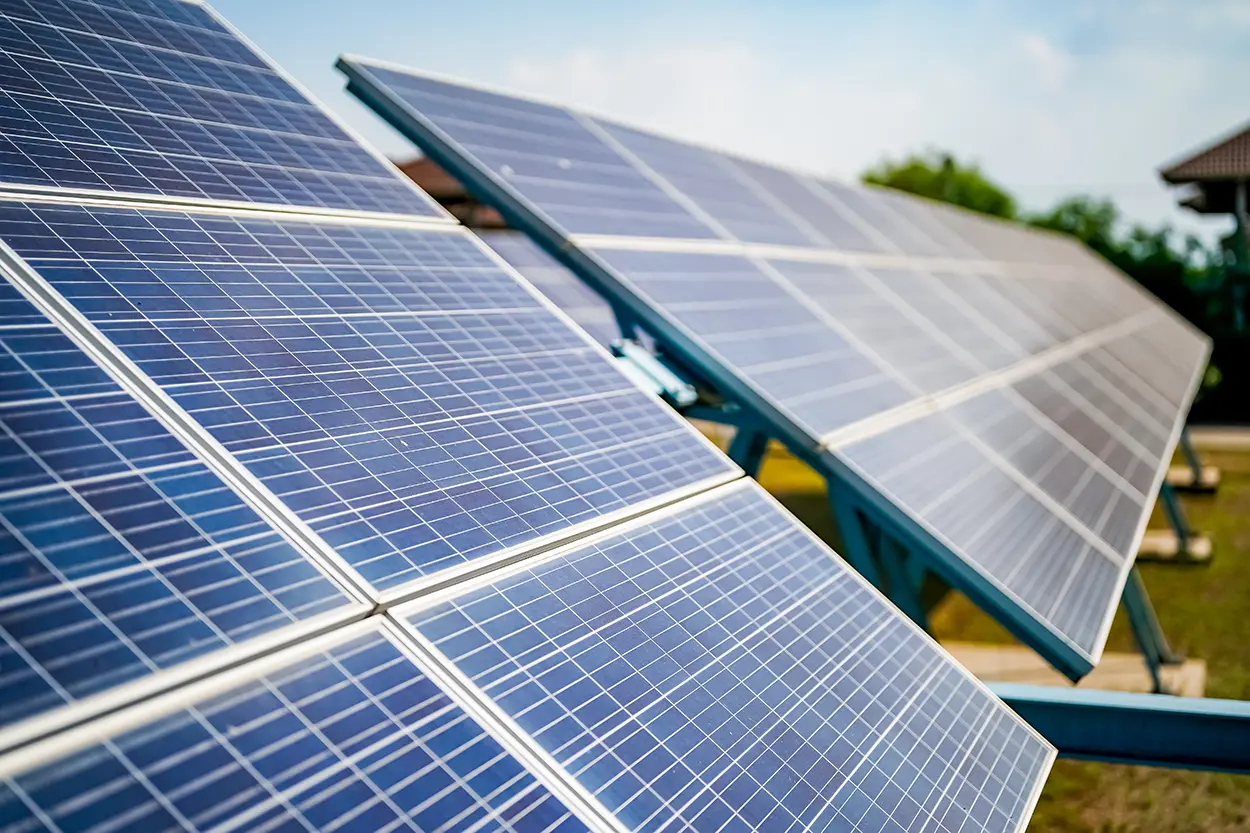
Residential solar systems use photovoltaic (PV) panels to convert sunlight into direct current (DC) electricity. PV panels are arrays of solar cells made primarily from silicon, which generates a small electric current when light strikes it. Individual cells are wired together into panels, and panels are wired together in arrays sized to meet the home’s energy needs.
Inverters: Converting DC to AC
Your home’s electrical system and the grid use alternating current (AC). The DC power generated by solar panels must be converted to AC before it can power your home’s appliances or be exported to the grid. This conversion is handled by an inverter.
There are three common inverter configurations:
- String inverter: A single central inverter converts power from the entire array. Simple, durable, and lower cost. The limitation is that the performance of the entire string is constrained by the lowest-performing panel — partial shading of one panel reduces output from the whole string.
- Microinverters: Individual small inverters attached to each panel. Each panel operates independently, so shading on one panel does not affect others. More expensive per watt but provides better performance in partially shaded conditions and per-panel monitoring.
- Power optimizers with central inverter: A middle option that attaches DC optimizers to each panel to maximize individual panel output, then routes DC to a central string inverter. Performance in shade is similar to microinverters at somewhat lower cost.
Net Metering and Grid Connection
Most residential solar systems are grid-tied — they remain connected to the utility grid and use net metering to manage the difference between solar production and household consumption. When your solar system produces more electricity than your home uses, excess power is exported to the grid and your meter runs backward (or a credit is logged). When the system produces less than your consumption (at night or on cloudy days), you draw from the grid normally.
Net metering policies vary significantly by state and utility — some provide full retail credit for exported power, others provide a lower wholesale rate. Understanding your utility’s specific net metering policy is essential for accurately projecting the financial return on a solar investment. Your state’s public utilities commission website is the authoritative source for net metering rules in your state. I learned this the hard way when my installer’s initial savings estimate assumed full retail net metering, and I later found out my utility had shifted to a lower export rate a year earlier — always confirm the current policy directly with your utility rather than trusting a number in a sales proposal.
Is Your Home a Good Candidate for Solar?
Roof Characteristics
Most residential solar is roof-mounted. A good candidate roof has:
- South-facing orientation (in the Northern Hemisphere), or southwest- or southeast-facing with manageable output reduction. East- and west-facing roofs produce less energy but can still be economically viable depending on local rates and incentives.
- Minimal shading from trees, chimneys, or neighboring structures, particularly in the middle of the day when production is highest
- Sufficient usable, unobstructed roof area — a typical 6-8 kW residential system requires roughly 400-500 square feet of panel area
- A roof in good condition with sufficient remaining life — installing solar on a roof that will need replacement in 5 years means you will need to remove and reinstall the panels at significant additional cost. If your roof is more than 15 years old, a professional evaluation before solar installation is advisable.
A mistake I made the first time I evaluated my own roof was eyeballing the age instead of checking the actual roofing permit on file with my county — I assumed my roof had another decade of life left, and a roofer pointed out during the pre-installation inspection that it had about half that. Pulling the permit history took ten minutes and would have saved me from an awkward surprise mid-project.
Your Electricity Bills
Solar is most financially attractive when your electricity costs are high. The financial case for solar depends primarily on the cost per kilowatt-hour (kWh) you currently pay your utility. In states with high residential electricity rates, the payback period is shorter. In states with very low electricity rates, the same system may take significantly longer to pay back.
Review your last 12 months of utility bills to determine your average monthly and annual electricity consumption in kWh. This figure, combined with your utility’s current rate and your state’s net metering policy, is the foundation of any realistic solar payback calculation.
Federal and State Solar Incentives
The Federal Solar Investment Tax Credit (ITC)
The most significant federal incentive for residential solar is the Residential Clean Energy Credit (formerly and commonly called the Solar Investment Tax Credit). As of 2024 under the Inflation Reduction Act, this credit equals 30 percent of the total cost of a qualifying solar system installation, applied directly against your federal income tax liability. The U.S. Department of Energy’s homeowner’s guide to the federal solar tax credit explains who qualifies, what costs are included, and how to claim the credit on your return.
Key points about the ITC:
- It is a credit against your tax liability, not a refund — if your tax liability is smaller than the credit amount, the unused portion carries forward to future tax years
- The credit applies to the full installed cost of the system, including equipment and labor
- Battery storage systems added at the same time as a solar installation also qualify for the credit under current rules
- The 30 percent rate is set through 2032 under the Inflation Reduction Act
State and Utility Incentives
Many states and utilities offer additional incentives beyond the federal credit: state tax credits, property tax exemptions for the added home value from solar, sales tax exemptions on solar equipment purchases, and utility rebate programs. The Database of State Incentives for Renewables and Efficiency at dsireusa.org maintains a comprehensive, regularly updated database of every state and utility incentive program in the United States — entering your zip code returns the specific programs available in your area.
Financing Solar: Purchase vs. Loan vs. Lease vs. PPA
Outright Purchase
Buying the system outright (cash purchase) maximizes your financial return — you receive the full value of the energy produced, claim the full tax credit, and have no loan interest to offset your savings. The upfront cost is significant (typically $20,000-$40,000 before incentives for an average residential system), but after the ITC the net cost is typically $14,000-$28,000. Payback periods of 6-12 years are common depending on local rates, incentives, and system performance.
Solar Loans
Solar loans allow homeowners to purchase a system with financing, spreading the cost over 10-25 years while still owning the system and claiming the tax credit. Loan interest rates and terms vary significantly — secured home equity loans typically offer lower interest rates than unsecured solar-specific loans. Over the loan term, total cost is higher than a cash purchase due to interest, but many homeowners see positive cash flow from day one when the loan payment is less than the monthly electricity bill savings.
Solar Leases and Power Purchase Agreements (PPAs)
With a lease, you pay a monthly fee to use a solar system owned by the solar company. With a PPA, you pay a per-kWh rate for the electricity the system produces, typically below your utility rate. In both structures, you do not own the system, do not claim the tax credit, and have a long-term contract (often 20-25 years) with the solar company.
Leases and PPAs have lower upfront costs and can provide immediate bill savings without a large purchase. The trade-off is that the financial return is lower than ownership, the long-term contract can complicate home sale, and the solar company retains the tax credit. For homeowners who cannot qualify for financing or prefer no upfront investment, these arrangements can still be financially beneficial compared to utility rates alone.
Getting Solar Quotes: What to Ask
- What is the system size in kilowatts (kW) and how was that size determined relative to my electricity consumption?
- What are the specific panels and inverter brand and model being proposed, and what are the manufacturer warranty terms?
- What production guarantee or estimate does the installer provide, and how does it compare to the National Renewable Energy Laboratory’s PVWatts estimate for my address?
- Is the installer NABCEP (North American Board of Certified Energy Practitioners) certified?
- What does the installation warranty cover, and for how long?
- What is the total installed cost before and after the federal tax credit?
- What is the projected payback period based on my actual current electricity usage and rate?
Getting quotes from three or more installers and comparing them on system size, equipment quality, production estimates, warranties, and total cost provides the information needed to make a well-grounded decision. Online marketplaces that facilitate competitive quoting can streamline this process, but verify installer credentials independently. In my experience, the installer who was cheapest upfront also proposed the smallest system relative to my actual usage, which would have left me buying a meaningful amount of grid power every summer — comparing quotes on price alone, without checking system size against consumption, is how homeowners end up disappointed with their savings.
Battery Storage: Worth Adding?
Home battery storage (the most widely recognized product being the Tesla Powerwall, though many others exist) stores excess solar production for use when the sun is not generating — in the evening, on cloudy days, or during grid outages. Batteries are most valuable in areas with time-of-use utility pricing (where electricity costs more at certain hours), in areas with frequent grid outages, or in states with unfavorable net metering policies where exporting to the grid yields little credit.
Batteries add significant cost (typically $10,000-$15,000 installed before incentives) and extend the overall system payback period unless the local conditions make the additional value compelling. They are worth serious consideration for homes with frequent power outages or in markets with unfavorable net metering, and less clearly beneficial in markets with strong full-retail net metering and reliable grid service.
Home solar is a long-term investment that rewards careful evaluation before commitment. The financial case is real and meaningful in many situations, but it depends on your roof’s orientation, your electricity costs, local incentives, and the quality of the installer. A well-designed, properly installed system can generate meaningful savings for 25-30 years. Taking the time to understand the key variables before signing a contract is the single most important step in the process.
Written by Sarah Whitfield, BloggedTopics Travel & Lifestyle Editor. Last reviewed and updated August 15, 2026.
