Choosing the right international phone plan before a trip can be the difference between staying easily connected and coming home to a bill shock surprise. I learned this the hard way on a work trip to Portugal a few years ago, when I landed my regular domestic plan simply did not carry over, and by the time I checked my account two days in, I’d already racked up charges I hadn’t planned for. Domestic cell phone plans generally do not include full international coverage, so travelers need to actively plan ahead rather than assume their regular plan will work the same way abroad.
International Phone Plan Options at a Glance
There is no single best international phone plan for every traveler. The right choice depends on trip length, destination, and how much data you realistically need, so it helps to understand each major option before booking anything. In my experience, the mistake most travelers make is picking a plan the week before they leave instead of comparing options a month out, when there’s still time to order a local SIM or test an eSIM install.
Why International Roaming Costs More
When you use your phone outside your home carrier’s network, your device connects to a foreign network through roaming agreements between carriers. According to Canada’s national telecom regulator, the CRTC, international roaming fees apply to calls, texts, and data used while abroad, and these charges are typically separate from your regular monthly plan costs, as explained in the CRTC’s consumer guide to international roaming. Many devices also use background data automatically, so charges can accumulate even when you are not actively using the phone.
Option 1: Carrier Travel Add-Ons
Most major carriers offer temporary international travel packages that bundle a set amount of calling, texting, and data for a flat daily or trip-length fee. These are usually the simplest option since your existing number and voicemail continue working normally. Before you leave, contact your carrier directly and ask:
- Which countries are included in the travel plan
- Whether the plan covers data, voice, text, or all three
- What happens automatically if you do not activate a travel plan
- How to monitor usage in real time while abroad
Option 2: Local SIM or Prepaid Card
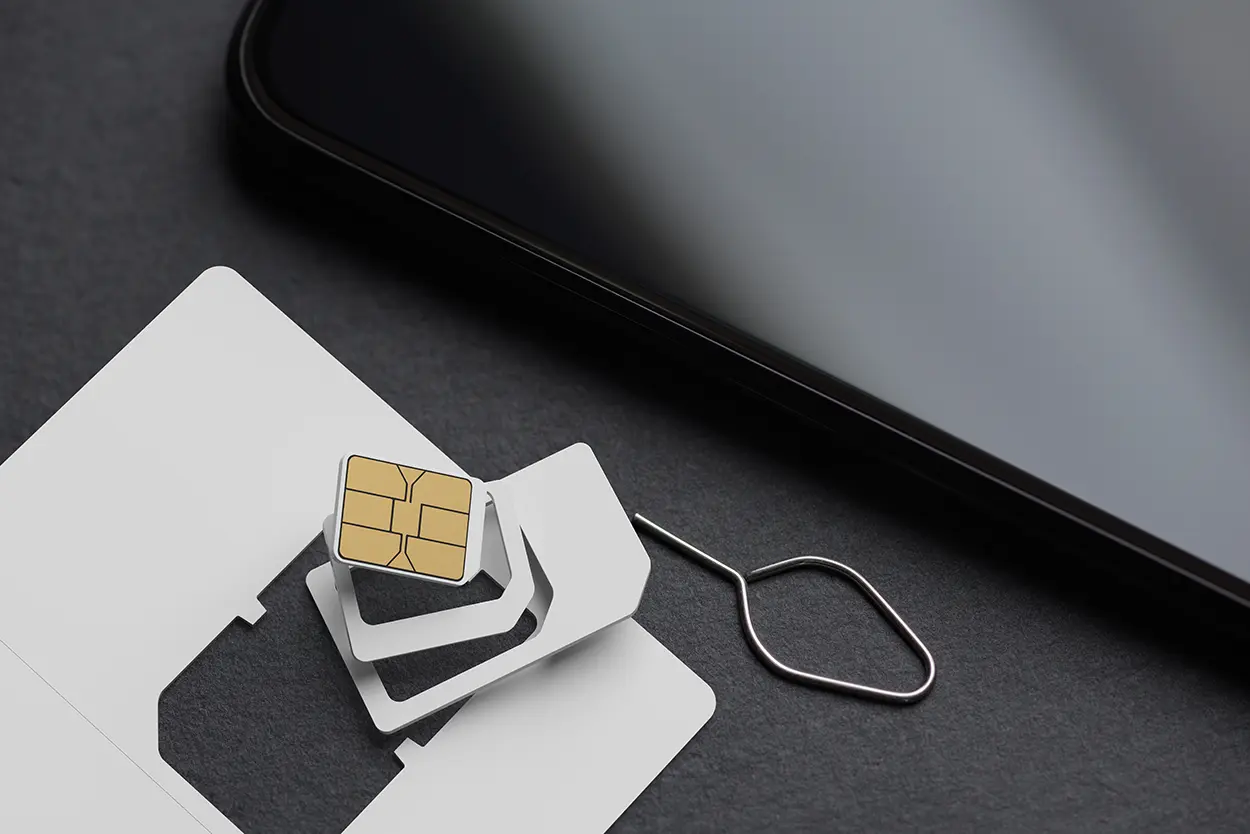
Buying a local SIM card or prepaid plan once you land can be considerably cheaper than carrier roaming rates, especially for longer trips. This requires an unlocked phone, meaning it is not tied to a single carrier. Check your phone’s lock status in its settings, or ask your home carrier to confirm, well before departure since unlocking can sometimes take time.
Option 3: eSIM for Travel
An eSIM is a digital SIM that can be installed on compatible phones without swapping a physical card, and many providers now sell short-term regional or country-specific eSIM data plans that activate instantly. This option works well for travelers who want data access without hunting for a local SIM retailer, though voice calling support varies by eSIM provider, so check whether the plan includes calls or data only. I’ve switched almost entirely to eSIMs for trips over the last couple of years, and the one thing I always double-check now is whether the plan includes a working local number for hotel confirmations and ride-share apps, since a few data-only eSIMs I tried left me without any way to receive verification texts.
Option 4: Wi-Fi Only With Airplane Mode
If constant connectivity is not essential, keeping your phone in airplane mode and connecting only to Wi-Fi at hotels, cafes, and airports avoids roaming charges entirely. Many messaging and calling apps work over Wi-Fi, letting you stay in touch without a cellular connection. This is the lowest-cost option, but it requires planning around Wi-Fi availability.
How to Avoid Surprise Charges
- Turn off automatic data roaming in your phone’s settings before departure, then enable only your chosen travel option
- Disable automatic app updates, cloud photo backups, and background refresh while traveling
- Set email and messaging apps to fetch data manually rather than automatically
- Track your data usage through your carrier’s app rather than relying solely on their alerts, since roaming usage reports can lag
- Confirm your international plan’s terms before you leave, including any early termination or minimum commitment fees
Turning Off Data Roaming Manually
On most phones, data roaming can be disabled through the cellular or mobile network settings menu. If unsure how to locate this setting on your specific device, consult your phone’s manual or contact your carrier directly, since menu names vary between operating systems and device models.
Within the European Union, travelers benefit from specific consumer protections around roaming. According to the European Union’s official consumer guidance, calls, texts, and data used while roaming within the EU are generally charged at the same rate as at home under the “Roam Like at Home” framework, and travelers must be notified automatically if they connect to a non-terrestrial or unusually priced network. You can review these protections directly at the European Union’s official roaming guidance. These specific protections apply only within the EU and EEA, so travelers heading elsewhere should not assume the same rules apply.
Estimating How Much Data You Actually Need
Before choosing a plan size, it helps to estimate realistic usage rather than guessing. Consider how you typically use data at home: streaming video and video calls use significantly more data than messaging apps, email, or basic web browsing. If you plan to rely on offline maps, translation apps, or messaging over Wi-Fi rather than continuous streaming, a smaller data package is often sufficient. Many carriers and eSIM providers list estimated data consumption for common activities, which can help you avoid both running out mid-trip and paying for far more than you use. When I test a new plan before a trip, I usually just buy the smaller data tier first; it’s much easier to top up an eSIM from an airport lounge than to try getting a refund on data you never used.
Special Considerations for Cruises and Flights
Phones can sometimes connect to maritime or in-flight satellite networks automatically, and these connections are frequently billed at very high per-minute or per-megabyte rates that are separate from standard international roaming. Keep your phone in airplane mode during flights and on ships unless you have specifically confirmed the cost of onboard connectivity.
Planning Ahead: A Pre-Trip Checklist
Because international connectivity issues are easy to fix before departure and much harder to fix once you have already landed, a short pre-trip checklist can save real frustration:
- Confirm whether your phone is unlocked at least a week before departure, in case unlocking takes time
- Compare your carrier’s travel add-on cost against a local SIM or eSIM option for your specific destination and trip length
- Download offline maps, translation packs, and any entertainment content you might want before you lose reliable connectivity
- Write down or save your carrier’s international customer support number somewhere accessible without data, such as a printed itinerary
- Test your chosen connectivity option, such as installing an eSIM profile, before you leave home whenever the provider allows it
Final Takeaway
The right international phone plan depends on your destination, trip length, and how much connectivity you actually need. Carrier add-ons offer simplicity, local SIM cards and eSIMs often offer better value, and Wi-Fi-only strategies avoid roaming costs altogether. Deciding in advance, rather than after you land, is what actually prevents the unpleasant surprise of a high phone bill.
Written by Sarah Whitfield, BloggedTopics Travel & Lifestyle Editor. Last reviewed and updated August 26, 2026.
