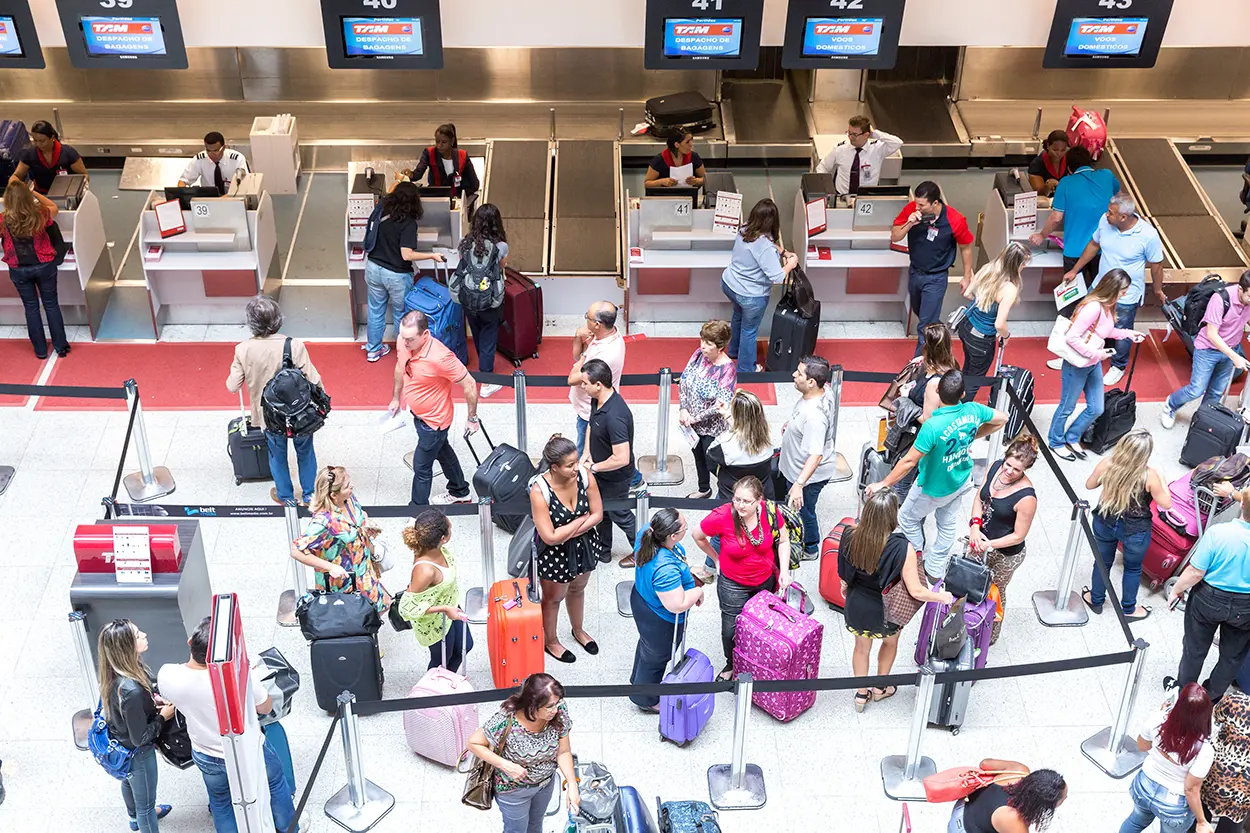
Good airport security wait time planning is about more than guessing how early to leave home. Wait times vary by airport, time of day, day of week, and season, and travelers who plan around real patterns instead of rules of thumb tend to avoid both unnecessary rushing and unnecessary waiting. I’ve missed a connection because I trusted a generic “arrive two hours early” rule at a hub airport during a holiday week, and I’ve never made that mistake twice.
Airport Security Wait Time: What Actually Drives It
Airport security wait time is rarely random. It follows predictable patterns tied to flight schedules, staffing, and seasonal travel volume, which means travelers who understand these patterns can plan around them instead of just hoping for a short line.
Why Wait Times Vary So Much
Security checkpoint volume depends on flight schedules, staffing levels, checkpoint configuration, and whether an airport is a major hub or a smaller regional facility. Mornings and early evenings at large hub airports tend to see the heaviest volume because that is when the most flights depart. Holidays and the days immediately surrounding them are reliably busier across nearly every airport, regardless of time of day.
General Arrival Time Guidelines
Airlines and airports commonly suggest arriving at least two hours before domestic flights and three hours before international flights, though this is a general guideline rather than a guarantee for every airport or travel date. Larger, busier airports and peak travel periods justify building in extra time beyond these baseline recommendations. The U.S. Department of Transportation’s consumer aviation guidance similarly encourages travelers to check with their airline and airport directly for recommended arrival windows, since these can vary by location and time of year, as outlined on the Department of Transportation’s aviation consumer protection page.
- Domestic flights at a familiar, smaller airport: arrive at least 90 minutes to 2 hours early
- Domestic flights at a large hub airport or during peak travel periods: arrive at least 2 to 2.5 hours early
- International flights: arrive at least 3 hours early to allow time for check-in, document verification, and security
- Holiday travel windows: add extra buffer time regardless of flight type, since volume increases across nearly all airports
How to Check Real Wait Times Before You Go
Several tools can help you gauge current or typical wait times rather than relying on guesswork:
- Airport-specific wait time pages. Some airports publish live or historical checkpoint wait time data directly on their websites.
- Mobile apps. Dedicated wait-time apps report crowd-sourced or checkpoint-reported estimates for specific terminals and checkpoints.
- Airline apps and alerts. Some airlines display estimated security wait times for the airport you are departing from within their own mobile apps.
Because wait times can shift quickly due to weather delays, staffing changes, or security incidents, treat any single data point as an estimate rather than a guarantee, and always build in a reasonable buffer. In my experience, the crowd-sourced apps are directionally useful but can be twenty minutes off in either direction, so I treat their number as a floor, not a promise.
Trusted Traveler Programs and Faster Screening Lanes
Enrollment in a trusted traveler program can meaningfully reduce time spent in standard security lines, since these programs use dedicated lanes with generally lower average wait times. Eligibility, application steps, and interview requirements vary by program, so research the specific requirements well before your travel date, since processing can take weeks. The U.S. Department of Homeland Security’s official Trusted Traveler Programs site explains eligibility and application steps for these programs, and is the most reliable source for current processing times, available at DHS Trusted Traveler Programs.
Factors That Slow Down Your Personal Screening Time
Even in a short line, individual screening speed depends on preparation. Common slowdowns include:
- Not removing laptops, liquids, or other checkpoint-restricted items from bags in advance
- Wearing items with metal that trigger additional screening, such as certain belts or footwear
- Carrying prohibited items that require additional inspection or confiscation
- Unfamiliarity with a specific airport’s checkpoint layout, leading to line changes or backtracking
Reviewing your airline’s and airport’s specific carry-on and screening rules in advance reduces the chance of last-minute delays once you reach the checkpoint.
A Simple Pre-Travel Checklist
- Check your specific airport’s typical wait time patterns for your travel day and time
- Confirm current checkpoint hours, since some smaller checkpoints have limited operating windows
- Review carry-on restrictions the night before, not the morning of your flight
- Add extra buffer time for holidays, severe weather forecasts, or major local events
- Have boarding passes and identification easily accessible before reaching the checkpoint
Weekday and Seasonal Patterns Worth Knowing
Beyond time of day, the day of the week matters. Many business-heavy routes see their heaviest traffic early in the work week and on Sunday evenings, while leisure-heavy routes often peak on Fridays and Sundays. Seasonal patterns compound this further: summer months, school breaks, and the weeks surrounding major holidays consistently bring higher passenger volumes across nearly all airports, which in turn increases average checkpoint wait times even at facilities that are normally quick to move through.
If your travel dates are flexible, shifting a flight by even a few hours, or choosing a mid-week departure over a weekend one, can meaningfully reduce the checkpoint congestion you encounter, independent of any other planning step.
What to Do If the Line Is Longer Than Expected
If you are already in line and concerned about missing your flight, notify airport staff or a supervisor immediately, since many airports have procedures to help travelers who are at risk of missing a departure due to line length. Waiting silently and hoping the line moves faster is rarely the best strategy once a genuine time conflict appears likely. I once flagged down a supervisor at a checkpoint with about forty minutes until boarding closed, and airport staff moved me into an expedited lane within a couple of minutes — it’s a service that exists precisely for that situation, so I’d rather ask and feel silly than miss the flight.
Packing Choices That Speed Up Screening
How you pack your carry-on the night before can shave real time off your checkpoint experience the next morning. Placing laptops, tablets, and liquids in easily accessible pockets rather than buried at the bottom of a bag means less fumbling at the bin station. Wearing slip-on shoes rather than lace-up boots, and avoiding belts with large metal buckles when possible, reduces the odds of triggering additional manual screening. Consolidating liquids into a single clear, resealable bag ahead of time, rather than searching for travel-size bottles at the checkpoint, is a small step that consistently saves time across nearly every airport’s standard screening process.
Final Takeaway
Airport security wait times are unpredictable in the moment but predictable in pattern. Understanding typical peak periods, checking available wait-time tools before you leave, and preparing your carry-on items in advance all reduce the chances of an avoidable delay, letting you spend less time worrying about the checkpoint and more time actually traveling.
Written by Sarah Whitfield, BloggedTopics Travel & Lifestyle Editor. Last reviewed and updated August 13, 2026.
