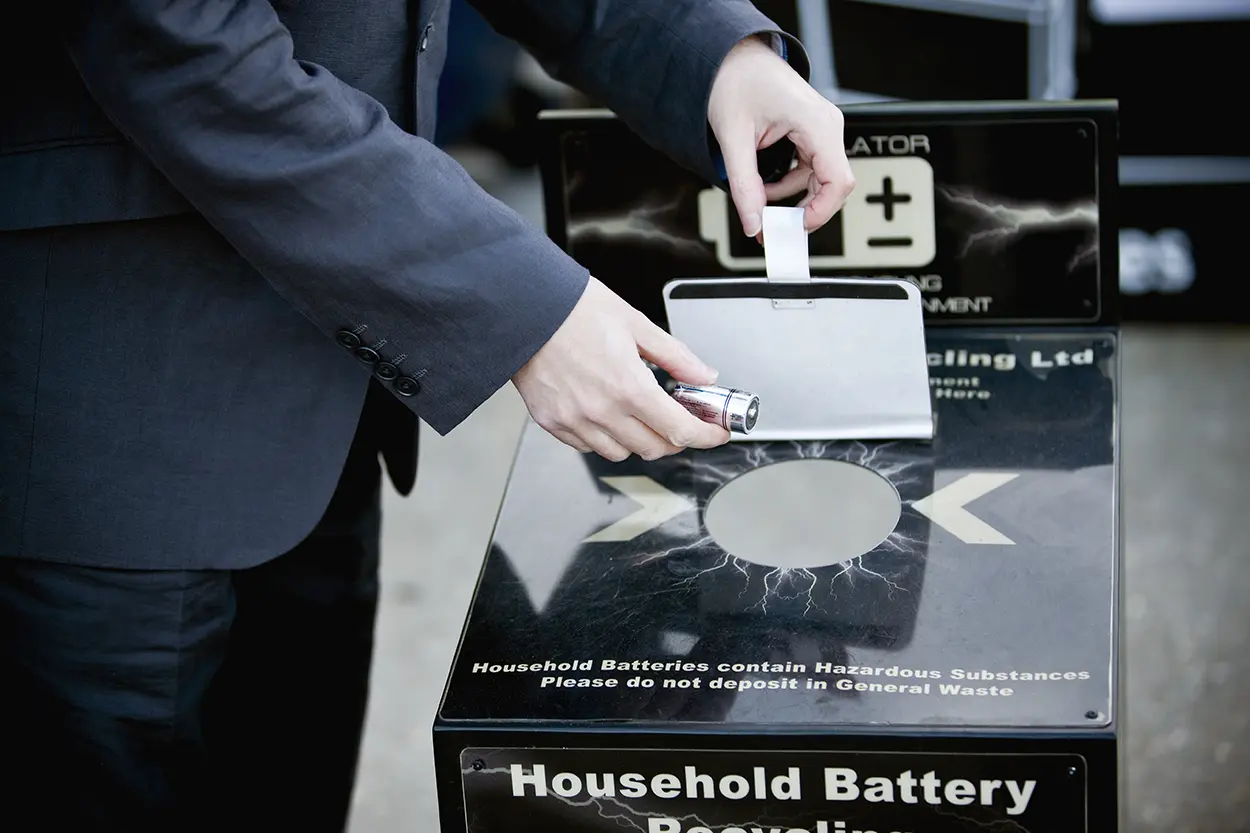
Old cordless tool packs, dead power banks, and drawers full of retired phones all raise the same question, and the answer is narrower than most people expect. I found this out the hard way when I nearly tossed a dead power bank straight into my recycling bin before a neighbor stopped me and pointed out what could happen at the sorting facility. Learning how to dispose of lithium-ion batteries starts with one rule: they do not belong in household garbage or in the curbside recycling bin.
The reason is physical, not bureaucratic. These batteries pack a lot of energy into a small space, and even a used battery can carry enough energy to injure someone or start a fire.
Why the Trash and the Recycling Bin Are Both Wrong
The Environmental Protection Agency is explicit that lithium-ion batteries and devices containing them should not go in household trash or in municipal recycling bins alongside plastic, paper, and glass. During collection and sorting, batteries and devices can be damaged or crushed by transport and processing equipment, which creates a fire hazard.
There is a resource argument as well. Lithium-ion batteries contain materials such as cobalt, graphite, and lithium that are considered critical minerals, and throwing batteries away loses those resources. EPA also notes that most lithium-ion batteries on the market would likely meet the definition of hazardous waste when discarded, as ignitable waste under code D001 or reactive waste under code D003.
How to Dispose of Lithium-Ion Batteries: Where They Should Go Instead
Separate collection is the whole idea. EPA directs consumers to take lithium-ion batteries to separate recycling or household hazardous waste collection points, and lists several ways to find one:
- Certified battery electronics recyclers that accept batteries.
- Participating retailers that provide electronics takeback services.
- Specialized battery recyclers.
- Local solid waste collection programs.
- Local household hazardous waste collection programs.
To locate a nearby option, EPA points to the Earth911 database and to Call2Recycle. New York State’s consumer safety guide similarly notes that non-vehicle rechargeable batteries weighing less than 25 pounds and in good condition may be returned through the Call2Recycle retail collection takeback program, and that e-mobility batteries in good condition may be accepted through voluntary collection programs or through household hazardous waste events and facilities when they come from households.
How to Prepare Batteries for Drop-Off
Preparation is short and it matters. EPA recommends two steps to help prevent fires: place each battery or device containing a battery in a separate plastic bag, and place non-conductive tape, such as electrical tape, over the battery’s terminals. Batteries should be taped and placed in separate bags before being taken to a collection point, and must be correctly identified, packaged, and labeled before being sent for recycling or disposal, since they are treated as hazardous materials in transportation.
Taping is worth understanding rather than memorizing. Exposed terminals can short-circuit when they touch metal objects such as keys or loose change, and once shorted, a cell can overheat and enter thermal runaway, expelling burning contents. Covering the terminals removes that path. In my experience, a strip of ordinary electrical tape from a hardware drawer works fine—I keep a small roll next to the box where I collect dead batteries so taping happens the moment a battery goes in, not as an afterthought right before a drop-off trip.
Devices With Built-In Batteries
Many products no longer have a battery you can remove, and that is fine. EPA advises sending electronic devices containing lithium-ion batteries to certified electronics recyclers, participating retailers and recyclers offering takeback services, or local solid waste or household hazardous waste programs, and keeping them out of the trash and municipal recycling bins.
Some batteries separate easily, such as those from power tools, and those can go to specialized battery recyclers or retailers participating in battery takeback. Others are not removable or serviceable by the user, and battery and product markings should be followed regarding safety and use. If you are unsure, leave the battery in the device and recycle the whole product.
Larger Battery Systems
Medium and large systems are a different project entirely. EPA advises contacting the manufacturer, automobile dealer, or the company that installed the battery for management options, and notes these systems may not be removable by a consumer because of their size and complexity. For vehicles, that means the dealer, the shop where the battery was purchased, or the salvage yard; for home energy storage, the equipment manufacturer or installer.
Damaged, Swollen, or Recalled Batteries
Any battery that looks or acts wrong needs different handling. EPA advises contacting the battery or device manufacturer for specific handling information when a lithium-ion battery becomes damaged, and notes that damaged, defective, or recalled batteries are more likely to catch fire during transportation and should not be shipped the same way as undamaged ones.
New York’s guide lists warning signs that a battery is failing: a device that feels extremely hot to the touch, swelling or bulging or any lump or leakage, hissing, cracking, or popping sounds, strong or unusual odors, and smoke. If those signs appear, the guidance is to stop using the device and turn it off immediately, unplug it from power, move it away from anything flammable if that can be done safely using tongs or gloves, leave the area, and call 9-1-1. A mistake I made once: I noticed a phone battery had swollen slightly and kept charging it anyway because it still seemed to work fine—I don’t do that anymore, and I’d rather lose a device than take that risk.
That guide is equally direct about fires: leave the area immediately and call 9-1-1, do not try to put the fire out yourself, and do not rely on water or a fire extinguisher, because these fires spread aggressively, can become explosive, and can reignite. For damaged, defective, or recalled batteries, it notes that Call2Recycle sells specialty kits for managing them safely.
Habits That Prevent Problems Before Disposal
Safe disposal is easier when a battery reaches the end of its life in good condition. New York’s consumer guidance recommends following manufacturer instructions, using only the charger that came with the device or a manufacturer-approved replacement, plugging devices directly into a wall outlet rather than a power strip, keeping devices and batteries at room temperature in a cool, dry place, removing them from the charger once fully charged, and inspecting regularly for cracked or broken cases. It also advises against disassembling or modifying batteries, charging while asleep or unattended, and charging on a bed, couch, or under a pillow.
Building a Simple Household Routine
A container in a cool, dry place away from living spaces, with tape and bags nearby, turns disposal into a scheduled errand instead of a decision made at the trash can. Batteries in good condition get taped and bagged as they retire, and go out with the next drop-off trip.
Because collection sites often accept several problem materials at once, it helps to plan the trip alongside other items, and our guide to household hazardous waste disposal covers what usually belongs in that category. For primary guidance, see the EPA’s page on used lithium-ion batteries and New York State’s lithium-ion battery consumer safety guide. Local collection rules vary, so confirm what your own solid waste program accepts.
Written by Sarah Whitfield, BloggedTopics Travel & Lifestyle Editor. Last reviewed and updated August 1, 2026.
