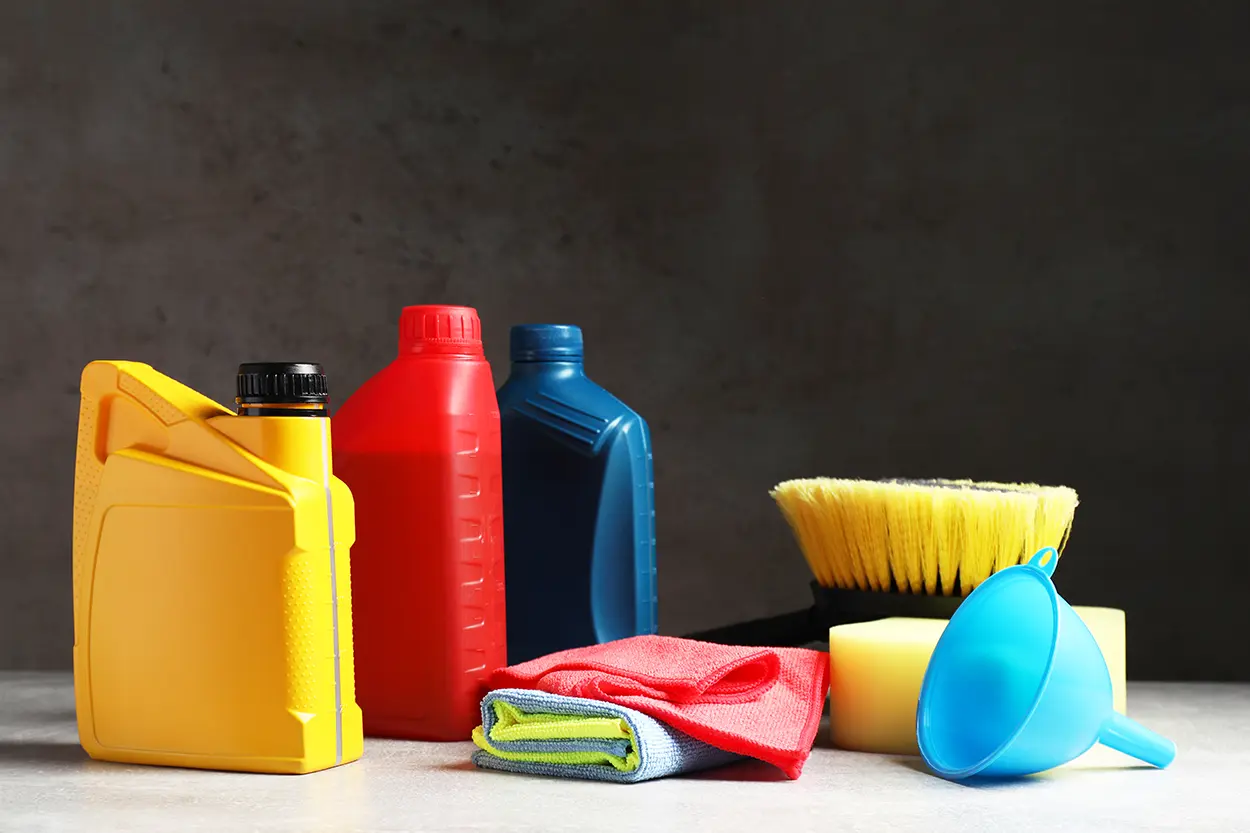
Understanding household hazardous waste disposal protects your family, your local water supply, and sanitation workers who handle trash and recycling every day. Many common household products are hazardous when discarded, even though they seem harmless sitting in a garage or under a sink, and tossing them in the regular trash or pouring them down a drain can create real environmental and safety problems. I went through this firsthand when I finally cleaned out a shed full of old paint cans and pesticide bottles left behind by a previous homeowner, and it took me longer than I expected to sort it all correctly.
Household Hazardous Waste Disposal: The Basics
Getting household hazardous waste disposal right comes down to three habits: identifying which products actually qualify as hazardous, sorting them correctly, and using an approved local collection option rather than the regular trash or a household drain.
What Counts as Household Hazardous Waste
According to the U.S. Environmental Protection Agency, household hazardous waste (HHW) includes chemical products commonly used in homes that may contain ingredients harmful to people and the environment, and these materials remain hazardous even after they are discarded. The EPA’s Household Hazardous Waste Quick Start Guide identifies common examples, including:
- Used oil and oil filters
- Paints and solvents
- Batteries
- Fluorescent lamps
- Automotive products, such as antifreeze and brake fluid
- Garden chemicals and pesticides
- Certain cleaning products
- Electronic waste
These materials can exhibit characteristics of toxicity, flammability, corrosivity, or reactivity, which is why they require different handling than ordinary household trash.
Step 1: Read the Label First
Before deciding how to dispose of any product, check any labels for ingredient information, signal words such as “danger,” “warning,” or “caution,” and hazard symbols. Labels often include disposal guidance directly from the manufacturer, and this information should guide your sorting and handling decisions.
Step 2: Sort by Hazard Type, Not Just Product Type
The EPA’s guidance recommends separating household hazardous waste according to hazard characteristics rather than simply grouping by product category:
- Flammables should be stored separately from other chemicals, ideally in a flammable-rated storage container away from heat sources.
- Corrosive acids and corrosive bases should be kept separate from each other to prevent dangerous reactions.
- Oxidizers should be stored separately from all other chemicals and further separated by specific chemical ingredient. For example, pool chemicals containing hypochlorites should be kept away from nitrate-based fertilizers.
- Reactive materials, such as ammunition, water-reactive substances, and cyanide-containing wastes, should be separated from each other and from all other chemicals.
Never combine unknown chemicals in a single container in an attempt to “consolidate” waste, since mixing incompatible substances can trigger dangerous reactions. When I was sorting through that inherited shed, I found an old coffee can with a mix of unlabeled liquids someone had combined years earlier — I didn’t touch it and instead called my local HHW facility ahead of drop-off, and they told me to bring it in a sealed secondary container and flag it separately at intake.
Step 3: Find an Approved Drop-Off Location
Most communities offer designated household hazardous waste drop-off events or permanent transfer stations that accept HHW safely. Many local governments publish HHW collection schedules and accepted-materials lists on their public works or environmental services websites. Because rules vary by municipality, always confirm accepted materials and hours before transporting anything.
The EPA’s Office of Land and Emergency Management also publishes broader waste management resources for households and communities, including how HHW programs fit into overall solid waste planning. You can review this material at the EPA’s hazardous waste resource hub, which links to state-specific program information in many cases.
What Not to Do
- Do not pour chemicals, paint, oil, or pesticides down household drains or storm drains
- Do not place batteries, fluorescent bulbs, or electronics in regular curbside trash if a local HHW or e-waste program exists
- Do not mix different chemical products together, even if they seem similar
- Do not store hazardous products near heat sources, open flames, or in direct sunlight while waiting for drop-off
Transporting Household Hazardous Waste Safely
- Keep products in their original, labeled containers whenever possible
- Place containers upright in a sturdy box lined with a plastic sheet or tray to catch any leaks
- Keep flammable and oxidizing materials separated during transport, consistent with your at-home sorting
- Transport HHW in the trunk or cargo area, away from passengers, and never in the interior of the vehicle
- Avoid smoking or using open flames near the vehicle while transporting flammable materials
Special Handling for Common High-Risk Items
Batteries
Household batteries, especially lithium-ion batteries found in many electronics and power tools, can pose a fire risk if damaged, punctured, or improperly disposed of in regular trash. Many retailers and municipal programs offer dedicated battery drop-off bins separate from general HHW collection.
Paint
Latex paint can sometimes be air-dried and disposed of as regular trash once fully solidified, depending on local rules, while oil-based paint typically requires HHW handling due to its flammability and solvent content. Always confirm your specific municipality’s rules, since latex paint policies vary by location. I’ve found that stirring in cat litter or a commercial paint hardener speeds up drying considerably compared to just leaving a half-full can open in the garage, which in my case took nearly three weeks to solidify on its own.
Pesticides and Garden Chemicals
Unused pesticides and garden chemicals should never be poured onto soil or into storm drains, since they can contaminate groundwater and harm local wildlife. These belong in HHW collection alongside other reactive or toxic materials.
Electronics
Electronic waste often contains heavy metals and other materials that require specialized handling. Many HHW programs accept electronics directly, or can direct you to a separate certified e-waste recycler in your area.
Building a Simple Home HHW Storage System
Many households accumulate hazardous products gradually over years of home projects, automotive upkeep, and yard care, which means a proper storage system matters even before disposal day arrives. Consider dedicating a specific shelf, bin, or cabinet away from living areas, ideally in a garage or shed rather than inside the home, for items awaiting drop-off. Keep this storage area away from children’s reach, away from pets, and away from any source of heat or open flame. Label a small area for each hazard category, flammables, corrosives, oxidizers, and reactives, so that sorting happens naturally as items are added rather than becoming an overwhelming task right before a collection event.
It also helps to keep a running list of what is stored and roughly when each item was added. Products that have sat unused for years are often good candidates for the next scheduled HHW collection rather than continued storage, since prolonged storage of aging chemical containers itself carries some risk of leaks or container degradation.
Reducing Household Hazardous Waste Going Forward
You can reduce future HHW by buying only the quantity of a hazardous product you actually need, choosing less hazardous alternatives when available, and using up products according to label directions rather than letting them expire in storage. Smaller stockpiles mean less risk and less material to dispose of later. In my experience, buying the smaller can of a specialty cleaner instead of the bulk size has saved me from having to deal with half-full containers of things I only needed once.
Final Takeaway
Household hazardous waste disposal is not just an environmental courtesy, it is a genuine safety practice. Reading labels, sorting by hazard type rather than convenience, and using an approved local drop-off program keeps dangerous materials away from waterways, sanitation workers, and your own household.
Written by Sarah Whitfield, BloggedTopics Travel & Lifestyle Editor. Last reviewed and updated July 30, 2026.
