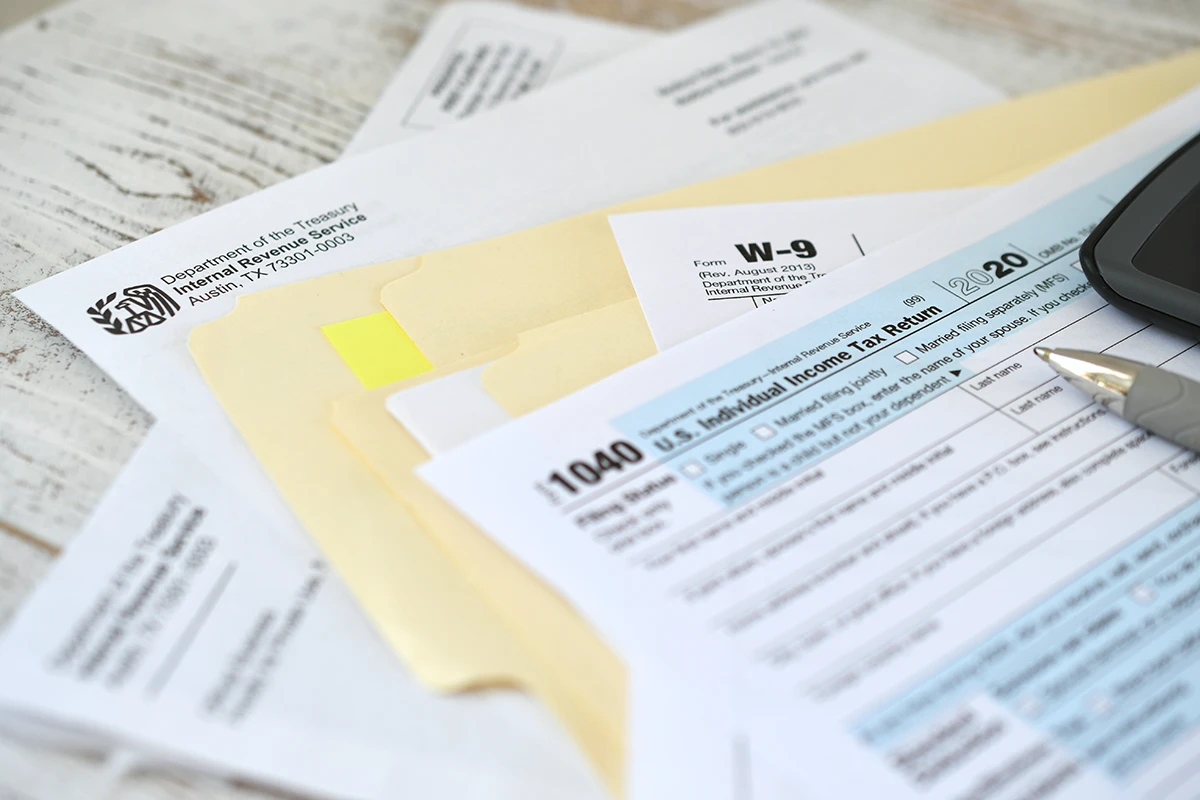
Tax season is stressful for many people not because the filing process itself is so complicated, but because gathering the right documents takes time and the consequences of missing something — an error, a missed deduction, or a required amendment — can mean delays, penalties, or leaving money on the table. Having a thorough document checklist and gathering everything before you begin filing makes the entire process significantly smoother.
This guide covers every major document category you may need to complete a U.S. federal income tax return, along with notes on what each document is and where it typically comes from. Not every item will apply to your situation — use this as a comprehensive reference and select the categories relevant to your life.
Personal Information
Before you start, make sure you have basic identifying information for yourself and any dependents:
- Social Security Number (SSN) or Individual Taxpayer Identification Number (ITIN) for yourself, your spouse, and all dependents
- Date of birth for all individuals on the return
- Last year’s tax return (for your AGI, which some e-filing systems use to verify your identity)
- Bank account and routing number for direct deposit of any refund
- Identity Protection PIN (IP PIN) if the IRS has assigned one to you
Income Documents
All income you receive during the year is potentially taxable and must be reported. The IRS receives copies of most of these forms directly from payers, so omitting income you have received is one of the most common causes of IRS notices and audits.
Employment Income
- Form W-2: Provided by your employer(s) by January 31. Reports wages, salary, tips, and taxes withheld. You should receive a W-2 from every employer you worked for during the tax year.
Freelance, Self-Employment, and Contract Income
- Form 1099-NEC: Received from clients or companies that paid you $600 or more during the year for non-employee work. You must report all self-employment income even if you do not receive a 1099-NEC.
- Form 1099-K: Issued by payment processors (PayPal, Venmo for business, Stripe, Square) when you receive payments for goods or services above the reporting threshold.
- Records of all business income, including cash payments that may not have generated a 1099.
Investment and Financial Income
- Form 1099-INT: From banks and financial institutions reporting interest income of $10 or more.
- Form 1099-DIV: From brokerages and mutual funds reporting dividends and capital gains distributions.
- Form 1099-B: From brokerages reporting the proceeds from sales of stocks, bonds, and other securities. You will also need your cost basis (what you originally paid) for each sold position.
- Form 1099-S: Reports proceeds from the sale of real estate.
- Cryptocurrency transaction records: The IRS treats cryptocurrency as property. Any sale, exchange, or use of cryptocurrency to purchase goods or services is a taxable event. Keep detailed records of all transactions including dates, amounts, and fair market values.
Retirement Income
- Form 1099-R: Reports distributions from pensions, annuities, IRAs, 401(k)s, and other retirement accounts. Includes information about whether taxes were withheld and whether any portion is a taxable or non-taxable distribution.
- Form SSA-1099: Reports Social Security benefits received. Up to 85% of Social Security benefits may be taxable depending on your total income.
Other Income Sources
- Alimony received (for divorce agreements executed before 2019 — alimony from pre-2019 agreements is taxable income for the recipient)
- Gambling winnings: Form W-2G from casinos and gaming facilities for significant winnings. All gambling winnings are taxable even without a W-2G.
- Rental income records: Total rents received and all expenses paid for rental properties.
- Business income records: If you operate a sole proprietorship, all income and expense records needed to complete Schedule C.
- Unemployment compensation: Form 1099-G. Unemployment benefits are taxable income.
- State tax refund: Form 1099-G. If you itemized deductions last year and received a state tax refund, part or all of that refund may be taxable.
Deduction Documents
Most taxpayers claim the standard deduction rather than itemizing, but knowing what deductions you may qualify for helps you make the most advantageous choice. The standard deduction amounts change annually — the IRS publishes current figures at IRS.gov.
If You May Itemize (Schedule A)
- Mortgage interest: Form 1098 from your mortgage lender. Reports mortgage interest paid, points paid, and in some cases property taxes collected in escrow.
- State and local taxes (SALT): Records of state and local income tax or sales tax paid, and property taxes paid. The combined SALT deduction is capped at $10,000 per return.
- Charitable contributions: Written acknowledgment from each charity for any donation of $250 or more. Bank records for smaller cash donations. Records of non-cash donations (clothing, furniture, vehicles) with fair market values.
- Medical expenses: Records of all out-of-pocket medical expenses paid during the year. Only expenses that exceed 7.5% of your Adjusted Gross Income are deductible.
- Student loan interest: Form 1098-E. Reports student loan interest paid. This is an above-the-line deduction available even without itemizing, subject to income limits.
Above-the-Line Deductions (Available to All Filers)
- IRA contributions: Records of contributions made to a traditional IRA during the year. Contributions may be deductible depending on your income and whether you have a workplace retirement plan.
- Health Savings Account (HSA) contributions: Form 5498-SA from your HSA administrator. Records of both employer and your own contributions.
- Self-employed health insurance premiums: If you are self-employed, premiums paid for your own health, dental, and vision insurance are deductible.
- Self-employment tax: Half of the self-employment tax you calculate on Schedule SE is deductible as an above-the-line adjustment.
- Educator expenses: Teachers can deduct up to $300 in out-of-pocket classroom supply expenses ($600 for married teachers filing jointly if both are educators).
Tax Credits
Tax credits reduce your tax liability dollar-for-dollar and are more valuable than equivalent deductions. Gather documentation for any credits you may qualify for:
- Child and Dependent Care Credit: Total amounts paid for qualifying daycare, before/after school programs, or summer day camps; provider’s name, address, and Taxpayer Identification Number.
- Child Tax Credit: Automatically calculated based on number of qualifying children and your income.
- Earned Income Tax Credit (EITC): For low to moderate income workers. The IRS’s EITC Assistant tool at IRS.gov/EITC can help determine eligibility.
- American Opportunity Tax Credit / Lifetime Learning Credit: Form 1098-T from educational institutions reporting tuition paid. Records of other qualified education expenses.
- Energy Efficient Home Improvement Credit: Receipts and manufacturer certifications for qualifying energy-efficient improvements (heat pumps, insulation, windows, doors, solar panels).
- Electric Vehicle Credit: Records of any new or used qualifying electric vehicle purchase, including VIN and purchase price.
Health Insurance Documents
- Form 1095-A: If you purchased health insurance through the federal marketplace (Healthcare.gov) or a state marketplace, you will receive this form. It is essential for calculating the Premium Tax Credit and must be on hand before filing.
- Form 1095-B or 1095-C: Confirms that you had qualifying health coverage during the year. You do not need to submit these forms but should keep them for your records.
Life Events That May Affect Your Return
Certain life changes during the year can significantly affect your tax return. If any of the following occurred, gather the relevant documentation:
- Marriage or divorce (name changes, new Social Security card if name changed)
- Birth or adoption of a child (Social Security Number for the child)
- Purchase or sale of a home (closing documents, Form 1098, Form 1099-S)
- Starting or closing a business
- Inherited assets (records of fair market value on the date of inheritance)
- Receiving a large gift or making a large gift
Important IRS Deadlines to Know
- January 31: Employers and financial institutions must mail W-2s and most 1099s.
- April 15 (typically): Federal tax return filing deadline and deadline for any taxes owed without penalty.
- October 15: Deadline for returns filed on extension (note: an extension to file is not an extension to pay — taxes owed are still due by April 15).
For complete and current information on filing requirements and deadlines, visit the IRS’s official Filing page at IRS.gov.
Final Checklist Before You File
- All W-2s collected from every employer
- All 1099s collected and reviewed
- Prior year return on hand for reference
- All deduction receipts and acknowledgment letters organized
- All credit documentation gathered
- Form 1095-A (if applicable) in hand
- Bank account information for direct deposit ready
- All Social Security Numbers confirmed for every person on the return
Being organized before you begin is the single most effective way to reduce errors, catch deductions you might otherwise miss, and minimize the time and stress involved in filing. Keep all tax documents for at least three years — the IRS generally has three years to audit a return, though the window extends to six years in cases of substantial underreporting.
 blogged