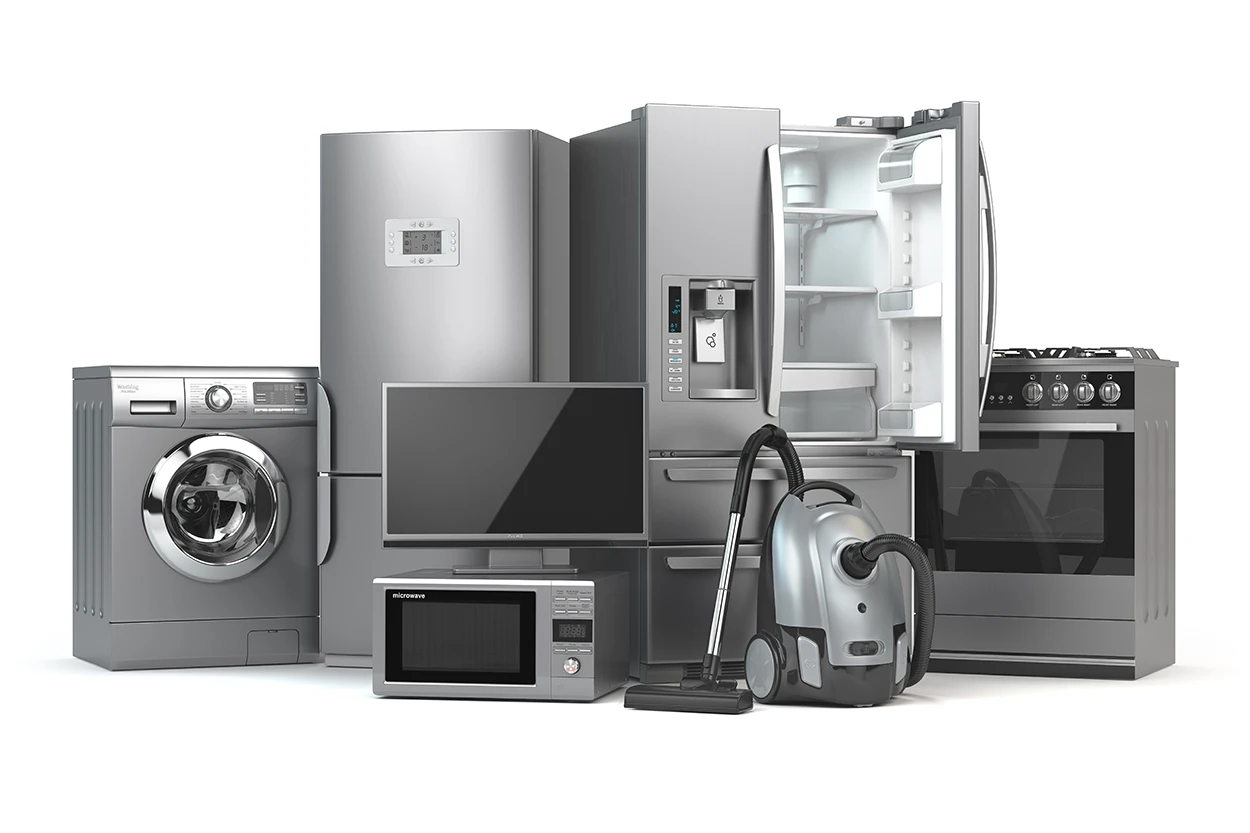
Home Appliance Buying Guide: What to Know Before Your Next Major Purchase
A smart appliance buying guide starts well before you set foot in a showroom or add something to your online cart. Major home appliances—refrigerators, dishwashers, washing machines, dryers, ranges, and HVAC equipment—represent some of the largest recurring purchases most households make, with individual units typically lasting 10 to 20 years and costing hundreds to thousands of dollars each. I’ve bought and replaced enough of these over the years, both for my own home and while helping family members shop, to know that buying the right appliance means evaluating capacity, energy efficiency, reliability history, warranty coverage, and total cost of ownership, not just the purchase price on the tag.
Why Appliance Buying Decisions Deserve Research
The least expensive appliance to buy is rarely the least expensive to own. A refrigerator with a $200 lower purchase price but 20 percent higher energy consumption can easily cost more over a 15-year lifespan through higher monthly utility bills. Similarly, a brand with a poor reliability track record that requires two or three service calls over its lifetime will cost significantly more in repair costs than a more reliable model purchased at a higher initial price. The purchase decision is really a decision about the total cost and experience over the appliance’s entire operational life.
Step One: Define Your Requirements Before Comparing Models
Before looking at specific products, document what you actually need from the appliance.
Capacity and Size
Measure the space available for the appliance carefully before shopping—width, depth, and height including any clearance requirements for doors and ventilation. For refrigerators, the capacity that fits your household is a function of how many people live in your home and how frequently you shop. A frequently cited guideline is 4 to 6 cubic feet of refrigerator space per adult, plus additional capacity if you cook and store food in bulk. Buying more capacity than you need wastes energy; buying less results in constant reorganization and food spoilage.
Fuel Type
For ranges, water heaters, and dryers, the available fuel type at your home—natural gas, propane, or electricity—may limit your options. If you are replacing gas with electric or vice versa, factor in the cost of utility line work, which can run several hundred to several thousand dollars depending on what infrastructure already exists.
Features You Will Actually Use
Appliance marketing emphasizes advanced features that add to purchase price but may add little practical value. Before paying a premium for a feature, ask whether you will genuinely use it in your daily routine. A refrigerator with a built-in craft ice maker adds $400 to $600 to the price; if you primarily use it at home for daily beverages, a standard ice maker serves identically. When I set this up in my own kitchen, I nearly paid extra for a Wi-Fi-connected range with a companion app — the salesperson pushed it hard — and I’m glad I stopped to ask myself whether I’d actually use the remote-preheat feature. Two years later, the answer is still no; I’ve opened that app maybe three times.
Understanding Energy Efficiency Ratings
Energy efficiency is one of the most consequential and most misunderstood factors in appliance selection. Two appliances can look identical on the showroom floor and cost wildly different amounts to operate over their lifetimes.
The ENERGY STAR Label
ENERGY STAR is a certification program administered jointly by the U.S. Environmental Protection Agency and the Department of Energy. Products earn the label by meeting energy efficiency standards that are typically 10 to 30 percent more efficient than minimum federal requirements. ENERGY STAR certified appliances often qualify for federal tax credits and utility rebates that further reduce the effective purchase price. The program’s product finder at energystar.gov lets you compare certified models by category and see estimated annual operating costs calculated using national average electricity prices.
EnergyGuide Labels
Federal law requires most major appliances to carry a yellow EnergyGuide label showing the appliance’s estimated annual energy consumption and how it compares to similar models. Use this label to calculate operating cost over the appliance’s expected lifespan: multiply the annual energy cost shown by the expected years of service to get a 10- or 15-year operating cost estimate you can compare across models.
Reliability: What the Data Shows
Reliability varies significantly by brand, product category, and even model generation within the same brand. Large-scale appliance reliability surveys reveal clear patterns:
- Front-loading washing machines consistently report higher repair rates than top-loaders in most survey years
- French door and side-by-side refrigerators with through-door ice and water dispensers report higher repair rates than simpler configurations
- Gas ranges generally report lower repair rates than electric ranges
- Brands performing well in reliability surveys in one decade can slip significantly as they introduce new model generations or change manufacturing approaches
Look for reliability data from the most recent two to three years, not decade-old reviews, because product quality can change substantially at major manufacturers within a few model cycles. In my experience, this is the step people skip most often — they remember a brand’s reputation from a decade ago and shop accordingly, without realizing the company changed manufacturing plants or ownership since then.
Warranty Coverage: What Matters and What Does Not
Standard appliance warranties in the U.S. typically cover parts and labor for one year, with extended coverage on specific components like compressors (often five to ten years) or heating elements. When evaluating warranty coverage:
- Labor coverage: A warranty that covers parts but not labor after the first year may still leave you with a significant repair bill if the technician charges $100 to $200 per hour
- In-home vs. carry-in service: Most appliance warranties offer in-home service for full-size appliances; confirm this rather than assuming it
- Extended warranty considerations: Third-party extended warranties sold at retail stores are typically sold at a significant profit margin. A better strategy for many households is to buy appliances with strong reliability records, use a credit card that automatically extends manufacturer warranties, and self-insure by setting aside the extended warranty cost in savings instead
Timing Your Purchase for the Best Price
Appliance prices follow predictable seasonal patterns that reward patient buyers:
- September and October: New model year appliances arrive; previous year models go on significant clearance discount
- Major holidays: Presidents Day, Memorial Day, Labor Day, and Black Friday/Cyber Monday are traditional sale periods with genuine discounts at most major retailers
- End of month: Retail sales staff working toward monthly quotas may have more flexibility to offer deals in the final days of the month
- Floor models: Display units are sold at meaningful discounts and are usually in perfectly functional condition despite cosmetic showroom wear—ask about floor model availability if you are flexible on color or configuration
Category-Specific Buying Tips
Refrigerators
Measure your space precisely—refrigerators now come in standard depth (24 to 30 inches), counter-depth (24 inches, flush with cabinetry), and built-in configurations at very different price points. Counter-depth refrigerators offer a cleaner look but sacrifice 20 to 30 percent of internal capacity compared to standard-depth models of the same width. Compressors are the most expensive component to repair; look for models with long compressor warranties and strong compressor reliability records.
Washing Machines and Dryers
Top-load agitator washers are less water-efficient than front-loaders or high-efficiency top-loaders but tend to be more reliable and cost less to repair. If your household does large loads frequently (bedding, heavy items), a top-loader with an agitator handles oversized loads more reliably than front-loading machines. Gas dryers are less expensive to operate than electric dryers in most utility markets but require a gas hookup and proper venting.
Dishwashers
Noise level (measured in decibels) matters considerably in open-plan homes. Quiet dishwashers run at 44 to 46 dB and are barely audible; budget models at 55 to 60 dB are clearly audible during a cycle. A third rack (a shallow rack at the top of the tub for utensils and small items) meaningfully increases usable capacity and is worth the modest price premium if you run full loads regularly.
Ranges and Ovens
Gas ranges provide responsive heat control that experienced cooks prefer for stovetop cooking. Induction ranges (using electromagnetic heating through compatible cookware) are more energy-efficient than either gas or traditional electric and heat faster than gas on high heat, but require induction-compatible cookware and a 240V electrical connection. If you bake frequently, a convection oven—which circulates hot air for more even cooking—is worth the modest price premium over conventional baking elements.
Where to Find Reliable Appliance Information
Not all appliance reviews are equally useful. The most reliable sources combine expert testing with large-scale owner reliability data. Consumer Reports provides both lab test results and owner reliability surveys across hundreds of models. The Department of Energy’s ENERGY STAR certified product list confirms efficiency claims. The U.S. Consumer Product Safety Commission’s product recall database is worth checking for any specific model you are seriously considering—safety recalls occur across all price tiers and brand reputations, and a quick search takes less than a minute.
Questions to Ask Before Finalizing a Purchase
- What is the total delivery and installation cost, including any required accessories like hoses, power cords, or exhaust duct kits?
- Will the retailer haul away the old appliance, and is there an additional fee?
- How long is the current lead time for delivery—especially relevant for appliances with supply chain constraints?
- Is the listed price the final price, or does it assume rebates that must be submitted separately after purchase?
- Are there current utility rebates available for this appliance through my energy provider?
Conclusion
A thoughtful appliance buying process—defining your requirements first, evaluating energy efficiency and reliability data, understanding warranty terms, and timing your purchase strategically—consistently delivers better outcomes than impulse buying driven by a sale price. The right appliance for your household is the one with the best combination of capacity, reliability, efficiency, and value over its full expected lifespan, not necessarily the cheapest or the most feature-rich option on the showroom floor. Taking a week to research before committing to any major appliance purchase is time well spent for a decision you will live with for the next decade or more.
Written by Sarah Whitfield, BloggedTopics Travel & Lifestyle Editor. Last reviewed and updated August 23, 2026.
