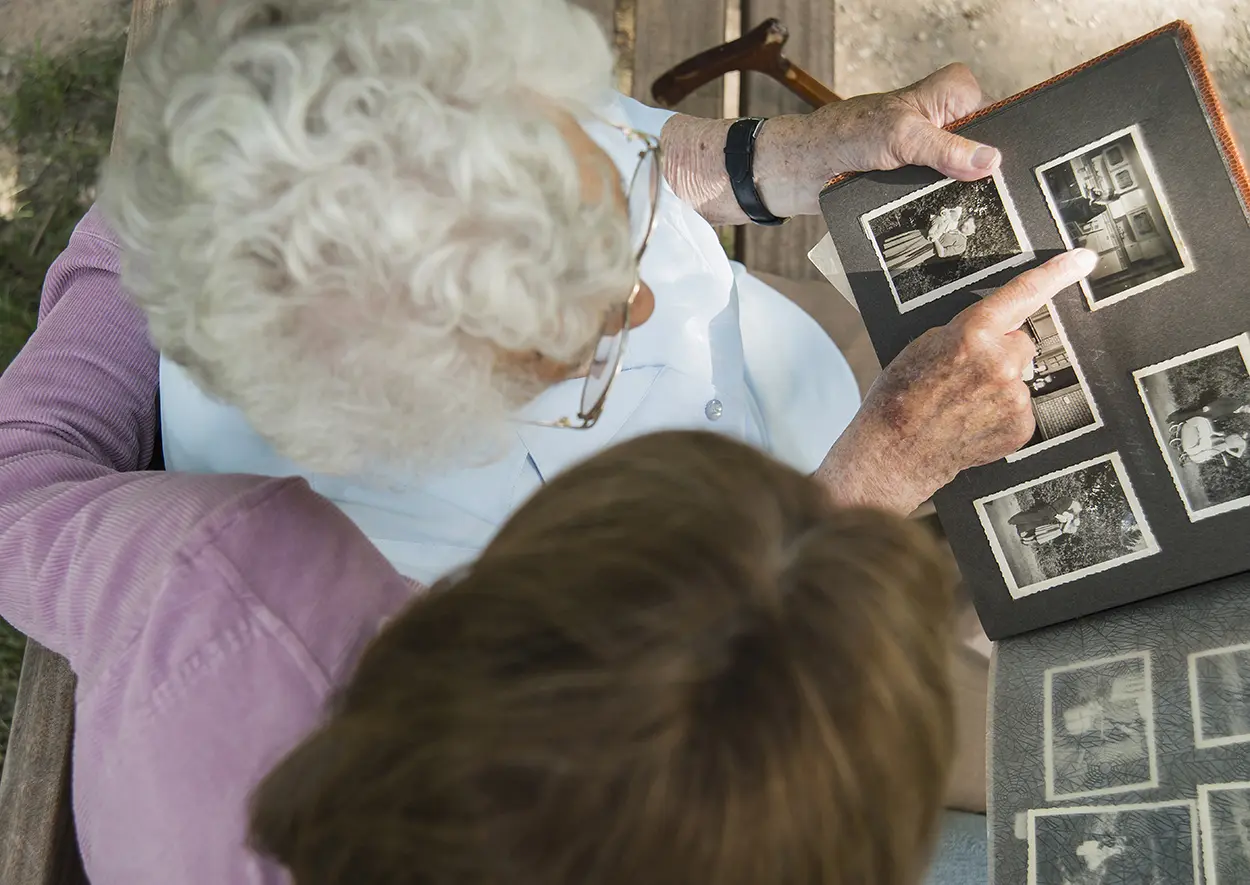
A small case for “memory keeping,” and a few habits that make the good days easier to find again.
Memory keeping is the simple, intentional practice of holding onto the moments and people that matter — not to perform them for anyone, but so you can return to them later. It is older than any app: the shoebox of photos, the ticket stub in a drawer, the grandparent who could tell the same story for the fortieth time and still make the room go quiet. What has changed isn’t the impulse. It’s that most of us have quietly stopped doing it.
We capture more than any humans in history — nearly two trillion photos a year (Photutorial) — and remember less of it. Your phone holds twelve thousand photos you will never scroll back to. The most common complaint about every journaling app — and there are dozens — is some version of “I write in it, but I never look back.” Even Apple’s own Journal app, more than two years after launch, still has no way to resurface a day from a year ago — no “on this day” nudge, no memory flashback of any kind. We have built endless tools for capture and almost nothing for return. And return is the entire point: psychologists who study nostalgia find that revisiting good memories measurably lifts mood, deepens our sense of meaning, and even softens loneliness (Psychology Today). A memory you can’t find again isn’t really a memory; it’s storage.
This matters more than it sounds, because the thing slipping away isn’t just the moments — it’s the people in them. Between 1990 and 2021, the share of Americans who say they have zero close friends quadrupled, from 3% to 12% (Survey Center on American Life). Writers have started calling it the “friendship recession” — and in 2023 the U.S. Surgeon General declared loneliness a public-health epidemic. We don’t usually lose the people we love in a single dramatic break. We lose them the way we lose everything else now — quietly, to forgetting. You think of an old friend in the shower, mean to text them, and don’t, and the thought is gone by the time you’ve toweled off.
The good news is that remembering is a skill, not a talent, and you can get noticeably better at it tonight. A few things that work:
Write the moment, not the day. “Tuesday was fine” is a chore you’ll abandon by Thursday. “Margaret laughed so hard at dinner she had to put her fork down” is a door you can walk back through years later. One specific sentence beats a paragraph of summary every time.
Name who was there. Memory is relational. “The dinner with Sam in October” is findable in your own head; “had a nice night out” is not. When you record a moment, record the people — they are the index your future self will search by.
Capture what a photo can’t. A photo remembers what something looked like. It does not remember who was there, where you were, or why it mattered — which is precisely the part you’ll forget. Spend the extra ten seconds on the part the camera misses.
Build in the return. This is the one almost everyone skips. Decide, in advance, how a memory will come back to you — a reminder, a “on this day” nudge, a monthly habit of rereading last month’s notes. The magic was never in the writing down. It’s in the morning a year later when something hands the moment back and says, in effect: you were here, with these people. Maybe text them.
That last move is also the cheapest repair we have for the friendship recession. A nudge to reach out that’s grounded in a real, specific, shared memory — “I was just thinking about that road trip” — lands completely differently than the cold, faintly guilt-tripping math of “you haven’t spoken in forty-seven days.” One is a sales pipeline for your friendships. The other is just love, with a working memory attached.
You can do all of this with a paper notebook and a standing Sunday-night habit — people kept memory beautifully for centuries before any of us had a phone. A few newer apps try to build that return in for you, Moments among them. But the practice matters more than any tool — so if all you have is a notebook, that’s where to begin.
So start with one sentence tonight, before the day blurs into the rest of them: Who were you with today, and what’s worth remembering? Write it down. Then, more importantly than anything else, give yourself a way to find it again.
The good days don’t have to disappear. They just have to be kept.
 blogged