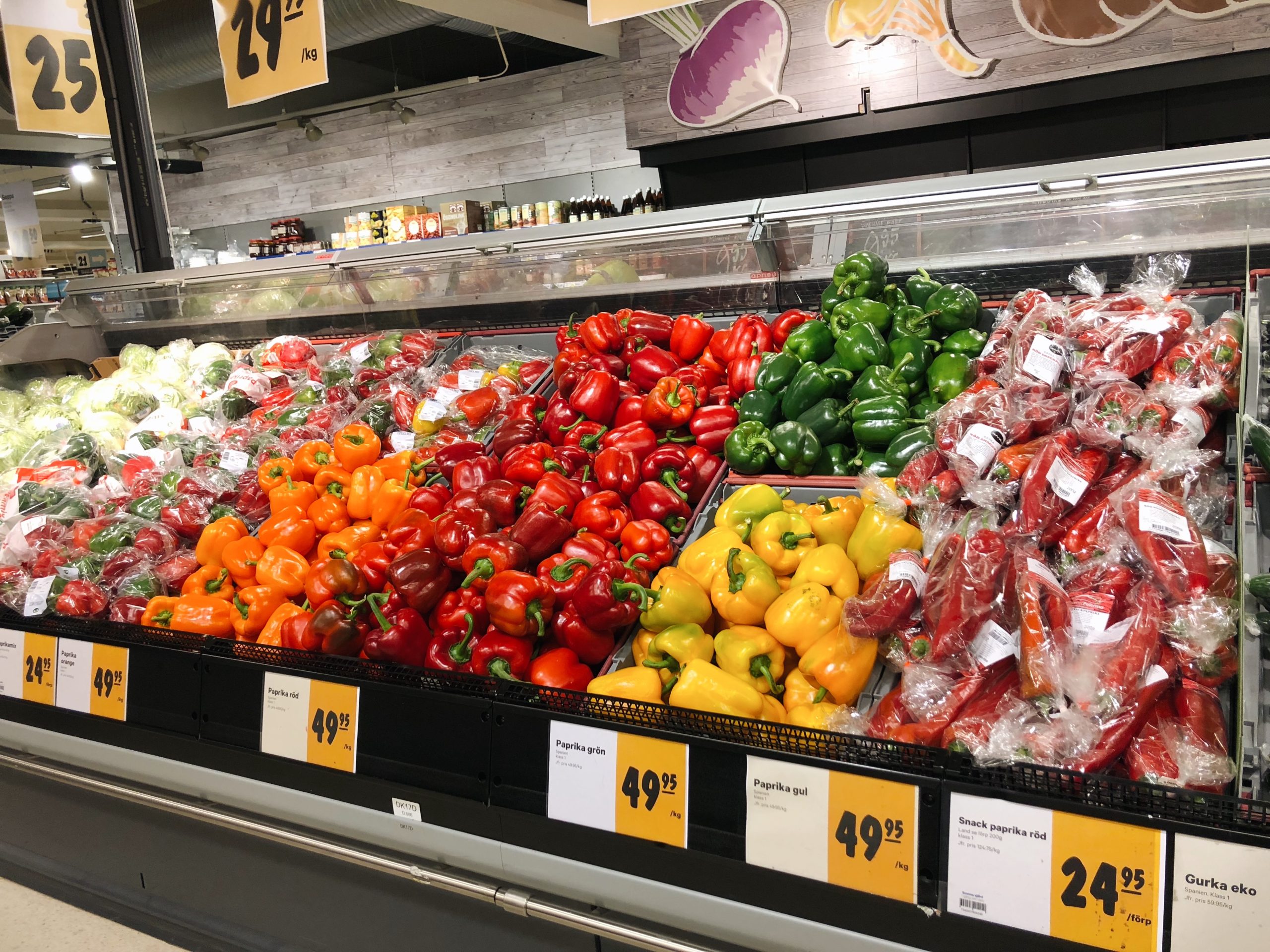
How to Compare Unit Prices at the Grocery Store
Learning how to compare unit prices at the grocery store is one of the most consistently money-saving skills available to anyone who buys food regularly. The sticker price on a product tells you what you will pay at the register — but it says nothing about whether you are getting a good or poor value compared to other sizes, brands, or formats of the same item. Unit pricing, displayed on the shelf label below the product, tells you the cost per standardized unit — per ounce, per pound, per 100-count, per fluid ounce — making direct comparisons possible regardless of package size. This guide explains how unit pricing works, how to read shelf labels accurately, where the math gets complicated, and how to apply unit price comparison consistently without it slowing down your shopping trip.
What Unit Pricing Is and Why It Exists
Unit pricing is a consumer protection tool. Most states require grocery stores to display unit prices on shelf labels alongside the total item price, though the specific requirement varies by state and store size. The Federal Trade Commission has historically supported unit pricing requirements as a transparency measure that enables consumers to make genuinely informed purchasing decisions — comparing a 12-ounce jar of pasta sauce at $3.49 with a 24-ounce jar at $5.99 by price alone requires mental arithmetic that most shoppers do not perform at the shelf. Unit pricing makes the comparison immediate.
The Federal Trade Commission’s consumer guidance resources and the USDA’s National Agricultural Library unit pricing reference provide background on unit pricing regulations and their consumer benefit — the USDA reference notes that unit pricing, when consistently applied, measurably improves value selection among shoppers who use it.
How to Read a Shelf Price Label
A standard grocery shelf label contains several pieces of information. The unit price is usually displayed in smaller text, often in the upper left corner of the label, with the per-unit measurement specified. Common unit measurements include:
- Per ounce (oz) — used for solid food products, dry goods, canned goods, cleaning products
- Per fluid ounce (fl oz) — used for beverages, liquid condiments, liquid cleaning products
- Per pound (lb) — used for produce, deli items sold by weight, bulk foods
- Per 100 count — used for items sold in quantity: vitamins, produce bags, zip-lock bags
- Per load or per sheet — used for laundry detergent, paper towels, and similar products where servings are meaningful units
To compare two products accurately, both unit prices must use the same unit of measurement. A product priced at $0.18 per ounce and another at $2.10 per pound cannot be compared directly — you would need to convert one. One pound equals 16 ounces, so $2.10 per pound equals $0.131 per ounce, making the second product the better value despite the larger per-pound number looking bigger at first glance.
The Big Package Is Not Always Cheaper
A widely held assumption is that larger packages always offer lower unit prices than smaller ones. This is often true, but not universally. Retailers regularly price products in ways that make smaller or mid-size packages competitive with or cheaper than the jumbo size, for several reasons:
- Promotional pricing on smaller sizes: A smaller package may be on sale while the larger size is at full price, temporarily reversing the unit price advantage
- Store brand vs. national brand: A store brand 16-ounce package often has a lower unit price than a national brand 32-ounce package
- Club store vs. grocery store: Club stores (Costco, Sam’s Club, BJ’s) almost always have lower unit prices on staples, but the math only works in your favor if you actually consume the full quantity before it expires or degrades in quality
- Pricing anomalies: Manufacturers sometimes price mid-size packages oddly to move slow-moving inventory. The unit price label catches these anomalies immediately
The consistent habit of checking the unit price — rather than assuming a relationship between package size and value — catches these cases every time.
Category-by-Category Unit Price Comparison Guide
Dry and canned goods
Dry goods (pasta, rice, beans, oats, cereal) and canned goods are among the most straightforward categories for unit price comparison because they are shelf-stable, making large-quantity purchases practical. Compare unit prices across brands and across sizes within a brand. Store brands and private label products consistently offer lower unit prices than national brands in this category with minimal quality difference for most staple items.
Fresh produce
Produce sold by weight (loose apples, bulk carrots, bulk mushrooms) is priced per pound, making comparison easy. Produce sold pre-packaged (a 3-pound bag of apples versus a 5-pound bag) requires unit price comparison to determine value. Check whether loose produce and packaged produce of the same item are both available — loose items are sometimes cheaper per pound, sometimes more expensive.
Cleaning and paper products
Cleaning products and paper goods (laundry detergent, dish soap, paper towels, toilet paper) are frequently on sale and frequently sold in multi-pack configurations that complicate comparison. For laundry detergent, the relevant unit is cost per load, not per ounce — a concentrated formula has a lower per-load cost than a standard formula even if the per-ounce price looks higher. Check whether the label uses per-load pricing; if it only shows per-ounce, check the product label for the number of loads per container and calculate cost per load manually.
Dairy and refrigerated items
Dairy products have limited shelf life, which constrains bulk purchasing. A large container of yogurt or sour cream with a low unit price is only advantageous if you will consume it before the expiration date. Factor your realistic consumption rate into bulk-buying decisions in perishable categories.
When Not to Optimize Purely on Unit Price
Unit price comparison is a value tool, not an absolute rule. Several factors legitimately override unit price:
- Expiration before use: Buying six months’ worth of olive oil at a low unit price is poor value if the last two months of it goes rancid
- Storage capacity: A bulk quantity that does not fit in your pantry is not a savings
- Quality differences that matter: For certain items — olive oil, canned tomatoes for cooking, cheese — quality differences between brands are real and may justify a higher unit price
- Convenience packaging: Individual portion-sized items (single-serve yogurt cups, individual spice packets) have higher unit prices but serve a function that bulk packaging does not always replace well
Using a Calculator App During Shopping
Despite shelf labels providing unit prices, situations arise where you want to calculate a unit price the label does not show, or where you want to verify a label that looks unusual. A simple approach: divide the total price by the total ounces or units. For a $4.79 item containing 13.5 ounces: 4.79 ÷ 13.5 = $0.355 per ounce. Most smartphone calculators handle this in seconds. If you shop regularly at the same store, the unit prices for your common staples become familiar enough that you will immediately notice when a product’s unit price has changed — a quiet price increase that the total price may obscure.
Building Unit Price Awareness Into Your Shopping Routine
Unit price comparison does not need to be a comprehensive exercise on every shopping trip. A practical approach is to apply it selectively: to high-frequency staples that you buy every week or two, to any item where you are choosing between sizes, and to any item where a sale price is prominently displayed. For true staples — pasta, canned beans, cleaning supplies, rice, oats — once you know the best value option at your regular store, you can simply default to that option without recalculating every trip. The initial comparison investment pays off on every subsequent purchase.
The USDA’s nutrition and food budgeting resources through its MyPlate shopping guidance consistently recommend unit price comparison as a core grocery budgeting skill, alongside meal planning and shopping with a list — tools that compound each other when used together.
 blogged