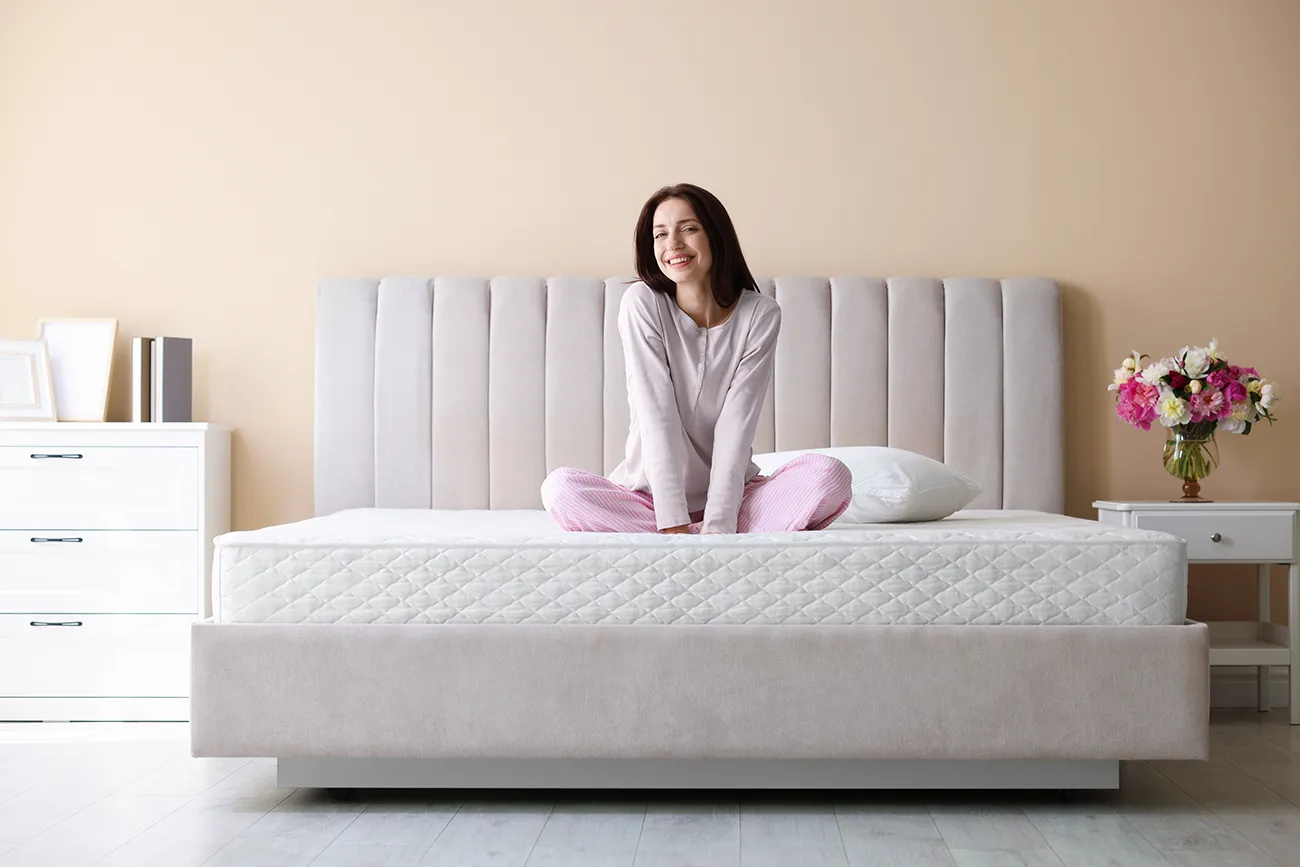
A mattress buying guide sounds straightforward until you are standing in a showroom surrounded by a dozen nearly identical-looking options at wildly different price points, each with a salesperson ready to explain why their brand is scientifically superior. Online, the options multiply further, with hundreds of brands making claims that are impossible to evaluate without lying down on the mattress for eight hours. This guide cuts through the noise with practical criteria that actually matter for comfort, longevity, and value.
How Long Should a Mattress Last?
Most quality mattresses have an effective lifespan of 7–10 years. After that, materials begin to break down in ways that affect sleep quality and spinal support — even if the mattress does not look visibly worn. If your mattress is over 8 years old and you are waking up with stiffness, aches, or poor sleep quality, age is a likely contributor.
Signs it is time to replace your mattress:
- Visible sagging or body impressions deeper than about 1 inch
- Springs that can be felt through the surface
- Waking up with back, neck, or shoulder pain that resolves during the day
- Sleeping better on other beds (hotels, guest rooms) than your own
- Excessive motion transfer disturbing you or your partner
- Allergy symptoms that worsen in bed — older mattresses accumulate dust mites
Mattress Types Explained
The mattress market breaks into a few major construction categories, each with distinct feel and performance characteristics:
Innerspring / Coil Mattresses
Traditional coil mattresses are supportive, breathable, and widely available. Modern innerspring models typically feature pocketed coils — individually wrapped springs that move independently, reducing motion transfer compared to older interconnected coil designs. Innersprings tend to sleep cooler than foam-only mattresses and have a bouncy, responsive feel. They work well for combination sleepers and those who dislike the “sinking” sensation of memory foam.
Memory Foam Mattresses
Memory foam contours closely to the body, providing pressure relief at the shoulders and hips. It tends to reduce motion transfer effectively — a significant benefit for couples. The main complaints with traditional memory foam are heat retention (the dense foam traps body heat) and a slow-response feel that some sleepers find uncomfortable when changing positions. Newer gel-infused, open-cell, and copper-infused memory foams address heat retention to varying degrees.
Latex Mattresses
Latex — whether natural (derived from rubber trees) or synthetic — offers responsive support with contouring that is less “sinking” than memory foam. Natural latex is durable, breathable, and resistant to dust mites and mold. Latex mattresses are often more expensive, particularly natural latex, but durability can justify the cost. They are a good option for those who want pressure relief without the slow response of traditional memory foam.
Hybrid Mattresses
Hybrids combine pocketed coil support with comfort layers of foam, latex, or other materials on top. They attempt to offer the breathability and responsiveness of coils with the pressure relief of foam or latex. Many of the most highly regarded online mattress brands fall into this category. Quality varies significantly by the thickness and composition of the comfort layers.
Airbeds
Adjustable firmness airbeds (like Sleep Number) use air chambers as the primary support system, allowing each partner to independently set their firmness level. They are the highest-cost option but offer genuine customization and longevity, with components that can be replaced individually.
Firmness: What Level Do You Need?
Firmness is measured on a scale from 1 (extremely soft) to 10 (extremely firm), and the right level depends primarily on sleep position and body weight:
- Side sleepers — generally benefit from softer to medium firmness (3–5) to cushion shoulders and hips at the widest contact points.
- Back sleepers — medium to medium-firm (5–7) provides spinal alignment support without excessive pressure on the lumbar region.
- Stomach sleepers — firmer (6–8) prevents hips from sinking below the chest, which can create spinal stress on softer surfaces.
- Combination sleepers — medium firmness (5–6) accommodates multiple positions without being too soft or too hard for any of them.
- Heavier sleepers (over 230 lbs) — often need a firmer mattress to avoid excess sinking; they compress materials more than lighter sleepers.
- Lighter sleepers (under 130 lbs) — may not compress a firm mattress enough to feel its benefits; they often prefer softer options.
Couples with different preferences may benefit from a split firmness hybrid or an adjustable airbed.
In-Store vs. Online Mattress Shopping
Both approaches have genuine advantages:
- In-store — you can lie on the mattress before buying, though a five-minute showroom test is not always predictive of long-term comfort. Sales pressure is a factor, and prices may not include delivery or frame disposal.
- Online — typically lower prices due to lower overhead, easier price comparison, and home trial periods (often 100–365 nights) that are more meaningful than showroom tests. Returns can be complicated — most brands donate or dispose of returned mattresses rather than taking them back into inventory, so the process is usually pick-up and refund rather than a return to a store.
Whichever approach you take, the sleep trial is your most important protection. Any reputable mattress sold directly to consumers should offer at minimum a 90-night trial period — do not buy from any online brand that does not offer this.
Price: What to Expect and What to Avoid
A quality queen-size mattress typically falls in the $800–$2,500 range for most buyers. Under $500 is likely to be a lower-durability option that compresses quickly. Over $3,000 may reflect genuine premium materials (natural latex, high-density foam), luxury brand positioning, or aggressive retail markup. Key things to understand about mattress pricing:
- MSRP is rarely paid — traditional retailers use inflated suggested retail prices and frequent “sales.” Online-direct brands typically offer more transparent pricing.
- Higher price does not guarantee better sleep — many highly-rated mattresses at $1,000–$1,400 outperform premium-priced alternatives in independent testing.
- Look for certified materials — CertiPUR-US certification for foams means the foam has been tested for harmful chemicals. The CertiPUR-US website lets you search for certified foam products.
Foundations and Bed Frames
The surface your mattress sits on affects performance and warranty validity:
- Most foam and hybrid mattresses require a solid or slatted base with slats no more than 3 inches apart.
- Traditional innerspring mattresses work on box springs, platform frames, or adjustable bases.
- Check your mattress manufacturer’s warranty for foundation requirements — using an incompatible base can void the warranty.
- Adjustable bases (power foundations that raise the head and feet) are compatible with most foam and hybrid mattresses and are increasingly popular for their versatility and back pain relief benefits.
Mattress Protectors: A Smart Investment
A waterproof, breathable mattress protector is worth purchasing along with any new mattress. It protects against spills, sweat, and dust mites — the primary causes of premature mattress degradation. Most warranties specifically exclude stains from coverage, so a protector also protects your warranty. Look for a protector that is breathable (not just a vinyl sheet) to avoid adding heat to a foam mattress. The FTC mattress buying guide provides additional consumer guidance on warranties, trial periods, and comparing mattress claims.
Understanding Warranty Terms
Mattress warranties typically cover manufacturing defects and sagging beyond a certain threshold (usually 0.75–1.5 inches). They do not cover comfort preferences, normal wear, or damage from improper support. Read the fine print:
- What depth of sagging triggers a warranty claim?
- Is the warranty prorated (meaning you cover part of the replacement cost after a certain number of years)?
- Does using a box spring vs. platform base affect coverage?
Mattress Buying Checklist
- ☑ Identify your sleep position and preferred firmness range
- ☑ Set a realistic budget ($800–$2,000 for most quality queen mattresses)
- ☑ Decide between in-store and online purchasing
- ☑ Confirm the return/trial policy (minimum 90 nights for online brands)
- ☑ Check for CertiPUR-US foam certification if buying foam or hybrid
- ☑ Verify your current bed frame meets the mattress support requirements
- ☑ Purchase a breathable, waterproof mattress protector
- ☑ Read the warranty terms before buying
The right mattress is a deeply personal decision, and no single option works for everyone. But by knowing your sleep position, understanding the major mattress types, using the sleep trial period seriously, and focusing on certified materials over marketing claims, you can make a confident purchase that pays off in years of better rest.
 blogged