SIM Card vs eSIM: What’s the Difference and Which Should You Use?
The SIM card vs eSIM question has become increasingly relevant as phone manufacturers eliminate physical SIM card slots from their flagship devices and carriers expand eSIM support across their networks. If you have bought a new phone recently, set up service in a new country, or shopped for a travel data plan, you have likely encountered both terms. This guide explains what each technology actually does, how they differ, the practical trade-offs between them, and how to decide which approach is right for your situation.
What a SIM Card Does
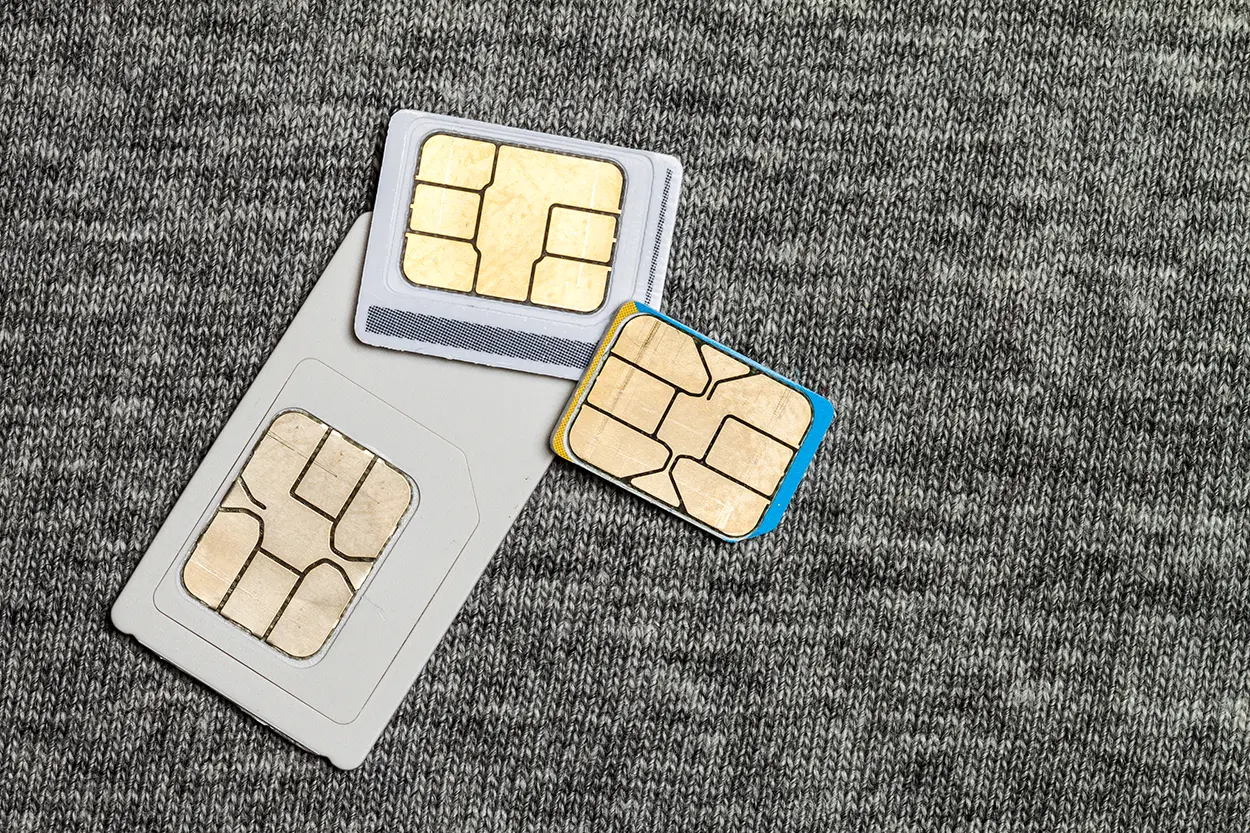
A SIM card — Subscriber Identity Module — is a small integrated circuit chip that identifies your account to your carrier’s network. It stores a unique identifier (IMSI), an authentication key, and a small amount of carrier-specific data that allows the network to recognize your device and connect it to your account.
Without a SIM card (or its eSIM equivalent), a phone cannot connect to any cellular network, make calls, send texts, or use mobile data. The SIM card is, functionally, the key that unlocks network access on a device.
I still keep a small case of spare nano-SIM adapters in my desk drawer from years of testing devices for reviews, and I’ve found that the tiny plastic ejector tool that comes with most phones is the first thing to get lost in a move — a straightened paperclip works just as well in a pinch if you ever need to pop a SIM tray open.
Physical SIM cards come in three sizes: Standard (the oldest and now rare), micro-SIM, and nano-SIM (the current standard in modern smartphones). Some older devices also used mini-SIMs. When swapping a SIM between devices, you need to ensure the new device uses the same SIM size, or use a carrier-provided SIM of the correct size.
What an eSIM Is
An eSIM — embedded SIM — is a SIM that is built directly into the device’s hardware. It is a small chip soldered onto the device’s motherboard rather than a removable card inserted into a tray. The “e” in eSIM stands for embedded, not electronic — all SIMs are electronic.
The eSIM stores carrier account information the same way a physical SIM does, but instead of swapping the physical card to change carriers, you download a carrier profile electronically — typically by scanning a QR code provided by the carrier or through the carrier’s app. The eSIM chip itself stays in the device permanently; what changes is the carrier profile loaded onto it.
The GSMA (the international organization representing mobile operators) established the eSIM standard, and most major carriers and device manufacturers worldwide have adopted it. The GSMA’s eSIM information page provides technical background on the standard and its deployment across carriers and devices.
When I switched my own primary line to an eSIM-only phone, the actual activation took under five minutes and felt almost anticlimactic after years of dealing with SIM ejector tools and tiny plastic trays.
Key Differences Between SIM Cards and eSIMs
Physical vs. Remote Provisioning
The most fundamental difference is how you activate service. With a physical SIM, you obtain a card from the carrier (in store, by mail, or from a third-party retailer), insert it into the device’s SIM tray, and service activates. With an eSIM, you activate service remotely — no physical card, no visit to a carrier store required. You receive activation instructions (typically a QR code) and complete setup through your phone’s settings.
Multiple Profiles on One Device
An eSIM can store multiple carrier profiles simultaneously, though only a limited number can be active at any given time. Modern iPhones, for example, can store more than twenty eSIM profiles and have up to two active at once (one for calls/texts and one for data, or two different lines). This is the foundation of dual-SIM functionality on devices without two physical SIM trays.
Physical SIM cards can only hold one carrier account per card. A device with two physical SIM trays can have two active carrier accounts, but changing from one carrier to another requires physically swapping the card.
Changing Carriers
Switching carriers with a physical SIM requires either obtaining a new SIM card from the new carrier or transferring your account to a new carrier’s SIM at a store or via mail. With an eSIM, switching involves downloading the new carrier’s profile, which can often be done entirely remotely in minutes. The old profile can be deleted or deactivated, and the new one activated without any physical step.
This makes eSIM particularly convenient for international travel: instead of purchasing a local physical SIM and swapping it (and potentially losing your primary SIM in the process), you download a local carrier’s eSIM profile for the duration of your trip and switch back to your home carrier’s profile when you return. In my experience testing travel eSIMs across a handful of trips, the profiles that activated instantly on arrival were the exception rather than the rule — I’ve had at least two that needed a phone restart before data actually connected, so I never treat a fresh eSIM install as confirmed working until I’ve actually loaded a webpage on it.
Device Locking and Unlocking
Physical SIMs and eSIMs are both affected by carrier locking — a policy some carriers use to prevent a device purchased on their network from being used on other carriers. An eSIM device can be just as carrier-locked as a physical SIM device. If you want to use your eSIM device with a different carrier, ensure the device is unlocked first. In the United States, the FCC’s rules require carriers to unlock devices at the owner’s request once certain conditions (typically completing the installment plan or completing the contract period) are met. A mistake I made once was assuming a phone was unlocked simply because I had finished paying it off — the carrier still required an explicit unlock request submitted through their site, and the eSIM profile from the new carrier wouldn’t activate until that request cleared, which took about two business days longer than I expected.
Losing or Damaging a SIM
A physical SIM card can be lost, bent, damaged, or corroded, requiring a replacement from the carrier. An eSIM, being embedded in the device hardware, cannot be lost or damaged independently of the device itself. If your device is damaged, the eSIM data can often be transferred to a replacement device by re-downloading your carrier profile, though this varies by carrier policy.
Device Support for eSIM
eSIM support is now standard on all current iPhone models (iPhone XS and later), all Google Pixel phones from Pixel 2 onward, most Samsung Galaxy flagship phones from 2019 forward, and many other Android devices. However, not all devices in every market support eSIM — some regional variants of popular phones are sold without eSIM capability to accommodate local infrastructure requirements.
Notably, iPhone models sold in the United States starting with the iPhone 14 no longer include a physical SIM card tray at all — they are eSIM-only devices. This is currently specific to U.S. models; international models of the same phones retain physical SIM trays due to varying carrier support for eSIM in different countries.
A practical snag worth planning for: transferring an eSIM to a new phone is not always the instant, self-service process carriers advertise. Depending on the carrier and whether you are moving between the same operating system or switching between iOS and Android, you may need to generate a new activation QR code through a carrier app or call support rather than simply restoring from a backup. If you are upgrading phones right before a trip, transfer or re-download the eSIM profile a few days early and confirm it connects to data before you actually need it — doing this the morning of a flight has caused more than one traveler to land with a phone that cannot get online.
Carrier Support for eSIM
All three major U.S. carriers — Verizon, AT&T, and T-Mobile — fully support eSIM on compatible devices. Most major MVNOs that operate on these networks have also added eSIM support, though availability varies. International support varies more widely; eSIM adoption is strong in most of Europe, Australia, Japan, South Korea, and other developed markets, but remains limited in some developing markets where physical SIM infrastructure is more entrenched.
Before relying on eSIM for international travel to a specific country, verify eSIM support with the carrier or travel SIM provider you intend to use in that country.
Practical Scenarios: When Each Option Is Preferable
When Physical SIM Is Preferable
- Traveling to countries or regions where local carrier eSIM support is limited or unavailable
- Sharing a device between two users with different SIM cards (easier to hand over a physical card)
- Using a very budget-friendly prepaid plan from a carrier that has not yet implemented eSIM provisioning
- Any situation where the phone is eSIM-only and needs physical SIM backup — a device in that category cannot accept physical SIMs at all
When eSIM Is Preferable
- International travel where you want to add a local data plan without carrying spare SIM cards or visiting a carrier store abroad
- Dual-SIM use on a device with only one physical SIM tray — pair an eSIM with your primary SIM
- Switching carriers without visiting a store or waiting for a SIM card in the mail
- Reducing the risk of a lost or physically damaged SIM during travel
- Setting up a new device quickly when you are away from home without access to a carrier store
eSIM and Security Considerations
SIM swapping — a fraud technique in which criminals convince a carrier to transfer a victim’s phone number to a SIM under the criminal’s control — is a real threat for both physical SIMs and eSIMs. eSIM does not inherently protect against SIM swapping because the attack targets the carrier account, not the physical SIM. Protecting your carrier account with a strong account PIN and being alert to signs that your phone has lost service unexpectedly (which can indicate a SIM swap in progress) are the relevant defenses for both SIM types.
The Cybersecurity and Infrastructure Security Agency’s cybersecurity best practices include guidance on protecting account credentials and recognizing signs of account compromise that apply to wireless accounts as well as online accounts.
Summary: SIM Card vs eSIM
- Physical SIM: Removable card; requires physical swap to change carriers; universally supported; can be lost or damaged; good for markets with limited eSIM support.
- eSIM: Embedded in device; carrier activation by QR code or app; multiple profiles storable; cannot be physically lost; ideal for international travel and quick carrier switching; requires carrier and device support.
For most people in markets with strong eSIM carrier support and modern devices, eSIM is the more convenient and flexible option. Physical SIMs remain essential for travel to certain regions and for devices that do not support eSIM. Understanding both allows you to use whichever is most convenient for each specific situation.
Written by Maria Chen, BloggedTopics Consumer Technology Editor. Last reviewed and updated July 29, 2026.
