Sleep problems can have many causes, and persistent insomnia deserves professional attention. This article is educational and is not a substitute for medical advice. But for many people, the first useful step is a sleep hygiene reset: make the evening more predictable, reduce signals that keep the brain alert, and protect the bedroom as a place for rest.
Keep timing consistent
Try to wake up at about the same time every day, even after a rough night. A consistent wake time helps anchor the timing of the next night’s sleep. The CDC NIOSH sleep improvement tips recommend going to bed and getting up at about the same times every day as a foundational sleep habit.
If bedtime varies widely from day to day or weekend to weekday, start by stabilizing the morning wake time first. Then build an evening wind-down routine that begins 60 to 90 minutes before your target bedtime: dim lights, reduce stimulating work or screen activity, prepare clothes or bags for tomorrow, and shift to quieter, lower-stakes activities like light reading or gentle stretching.
Avoid trying to catch up on sleep by sleeping significantly later on weekends. While a modest extra hour may help after a difficult week, very large shifts in weekend sleep timing can disrupt the internal clock further and make Monday mornings harder.
Make the bedroom easier to sleep in
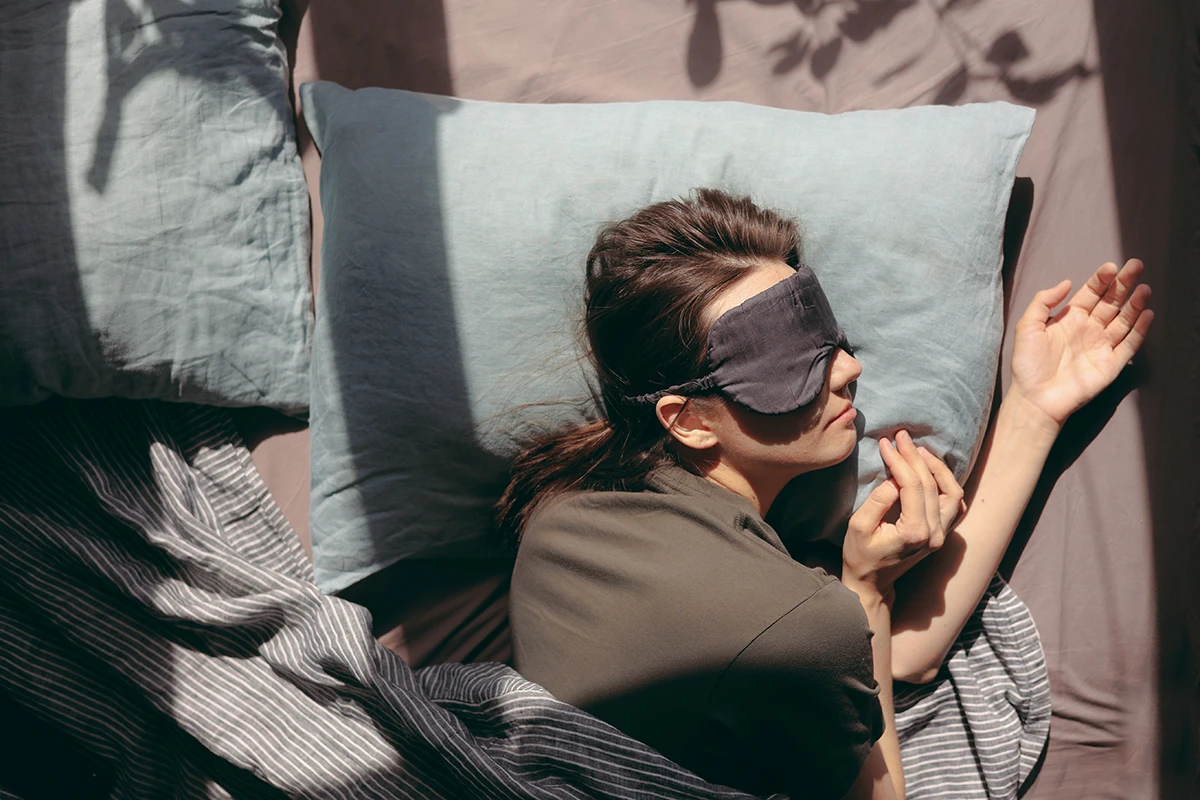
A dark, quiet, and slightly cool room helps many people fall and stay asleep more easily. Consider blackout curtains, an eye mask, earplugs, white noise, or a fan if your environment is regularly disruptive. The goal is to associate the bedroom strongly with rest rather than work, entertainment, or worry.
Keep phones and work tasks out of bed when possible. The mental association between your bed and stimulating activities can make it harder to wind down even when you feel tired. If you use your phone as an alarm clock, consider placing it face-down on a nightstand rather than keeping it in hand until the moment you close your eyes.
Caffeine timing matters more than many people realize. Caffeine has a half-life of several hours in the body, meaning half of the caffeine from an afternoon coffee is still active hours later. Some people are more caffeine-sensitive than average and may benefit from stopping caffeine after noon. Alcohol may make you feel drowsy initially but tends to disrupt sleep architecture later in the night, reducing restfulness even when total sleep time looks adequate.
Build a useful wind-down routine
A pre-sleep routine does not need to be elaborate. Even simple, consistent habits signal to the brain that sleep is approaching. This might include dimming lights after dinner, choosing a calming activity in the hour before bed, avoiding intense exercise late in the evening, and keeping the bedroom cool and dark.
Some people find that writing down a short to-do list or worry journal before bed helps offload mental noise that would otherwise surface at 2 a.m. Externalizing thoughts onto paper is a practical technique that some find genuinely useful, though individual results vary.
Do not turn sleep into a performance test
Paradoxically, worrying intensely about sleep often makes it worse. If you cannot sleep, lying in bed for long periods rehearsing the problem can reinforce wakefulness. Getting up for a quiet, low-light reset activity outside the bed and returning only when drowsiness returns is a technique sometimes recommended in sleep behavioral approaches, though anyone with persistent insomnia should discuss treatment options with a qualified healthcare provider.
If sleep problems are frequent, severe, last more than a few weeks, or are accompanied by loud snoring, breathing pauses during sleep, significant mood changes, or daytime sleepiness that affects functioning, talk with a healthcare professional. Sleep is a health issue, not a willpower contest, and effective evidence-based treatments exist for many common sleep disorders.
A better night often begins hours before bedtime. Make the cues consistent, lower the bar for what counts as a successful wind-down, and give your body a calmer runway into sleep rather than a hard stop from full activity to lights out.
Exercise, daylight, and sleep quality
Regular physical activity is broadly associated with better sleep quality in most people, though the timing relative to bedtime matters for some individuals. Intense vigorous exercise late in the evening can increase alertness and core body temperature in ways that delay sleep onset for some people. If you exercise in the evening and suspect it affects your sleep, experimenting with earlier workout times may be informative.
Natural light exposure during the day, particularly in the morning, helps regulate the circadian rhythm that governs sleep-wake cycles. This is especially relevant for people who work indoors under artificial lighting for most of the day. A brief walk outside in the morning or a workspace positioned to allow some natural light exposure can support the natural alignment of the body clock.
Addressing naps during a sleep reset
During a period of poor nighttime sleep, the temptation to nap during the day can be significant. Brief naps of twenty to thirty minutes before mid-afternoon are generally less disruptive to nighttime sleep than longer or later naps. Extended naps, particularly in the late afternoon or evening, can reduce the sleep pressure that helps you fall asleep at night and may contribute to a pattern of lighter, fragmented nighttime sleep.
If daytime sleepiness is significantly affecting functioning, a brief nap is sometimes better than pushing through exhaustion. The goal is to manage nap timing strategically rather than either using naps freely or avoiding them entirely regardless of context. If excessive daytime sleepiness is a persistent problem, it is worth discussing with a healthcare provider as it may indicate an underlying sleep disorder rather than simple sleep hygiene issues.
Building sleep consistency across the week
The single change that most sleep researchers and clinicians identify as foundational is wake time consistency: getting up at the same time every day, including weekends, regardless of when you fell asleep. This consistency stabilizes the circadian rhythm more reliably than almost any other sleep hygiene habit. It is also one of the harder habits to maintain because it requires resisting the temptation to sleep late after a poor night or an enjoyable late evening.
Approaching sleep with lower expectations and less pressure on any single night paradoxically tends to improve outcomes. Accepting that some nights will be imperfect, maintaining the routine regardless, and trusting the process over weeks rather than nights helps many people step back from the performance anxiety that often worsens sleep problems. Patience and consistency, rather than optimizing any single element, are the most durable foundations for better sleep.
 blogged