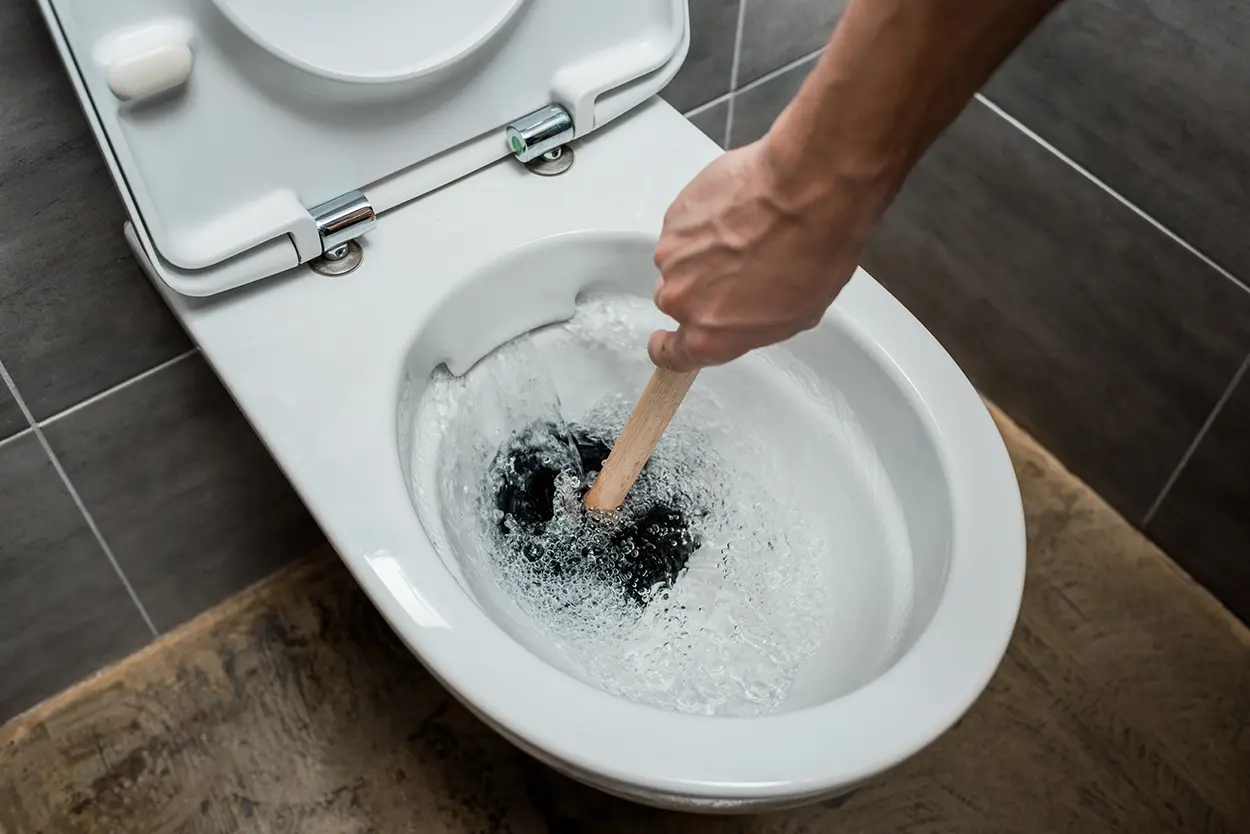
The worst decisions about a blocked toilet get made in the first ten seconds. Knowing how to unclog a toilet starts with what not to do: do not flush again, do not reach for a chemical product, and do not force anything down the drain in frustration.
Most household clogs are a physical blockage in a narrow passage. That means the sensible tools are physical too, and the sequence matters more than strength.
Stop the Water Before Anything Else
A second flush is what turns an inconvenience into a flooded floor. Instead, control the water first.
- Lift the tank lid and push the flapper down so it seals, which stops water from continuing into the bowl.
- Close the shutoff valve, usually located on the wall or floor behind the toilet, by turning it clockwise.
- Let the bowl settle before doing anything else, and put down towels if the level is close to the rim.
Knowing where that shutoff valve is before you need it is one of the more useful pieces of household knowledge there is. If it is stiff or leaking, that is a repair to schedule rather than force.
How to Unclog a Toilet With the Right Plunger
A flat-faced sink plunger is the wrong tool. A toilet needs a plunger with a flange, the extended rubber sleeve that seats inside the drain opening. Warm water softens stiff rubber and helps it seal.
Technique beats force. Seat the plunger fully so the flange is inside the outlet, then push down gently to expel trapped air before beginning firm, steady strokes. Keep the seal intact and let the water in the bowl do the work, since it is the water column, not the air, that moves the blockage. Ten to twenty controlled strokes accomplish more than a few violent ones, and there should be enough water in the bowl to cover the plunger head.
If the water starts draining, stop and let it clear. Then open the valve and test with a single flush.
When a Plunger Is Not Enough
If several rounds of plunging accomplish nothing, a toilet auger, sometimes called a closet auger, is the next step. It is a flexible cable in a protective sleeve designed to reach a blockage without scratching porcelain. Feed it in gently, turn the handle steadily, and stop if you meet firm resistance you cannot pass.
Hard objects are a different situation. A toothbrush, a small toy, or anything rigid can wedge in the trap, and pushing it deeper makes removal much harder and more expensive. If you know or suspect something solid went down, a plumber is the better call.
Call for professional help sooner rather than later when you notice signs of a larger problem, such as several fixtures draining slowly at the same time, gurgling in a tub or sink when the toilet is flushed, or water backing up somewhere else in the house. Those patterns can indicate a blockage beyond the toilet itself.
Why Chemical Drain Cleaners Deserve Caution
Chemical drain openers are marketed as the easy answer, and they carry real hazards. The National Capital Poison Center explains that non-enzymatic drain cleaners contain acidic or alkaline chemicals such as sulfuric acid, hydrochloric acid, sodium hydroxide, or potassium hydroxide, and that many contain highly concentrated corrosive chemicals that must be used with great caution.
The injury risk is specific. According to that guidance, corrosive or caustic drain cleaners can cause pain, irritation, and burns on skin contact, and injury can occur when the product splashes back from the drain, including when it is poured from too high up or when too much is poured into a completely blocked drain. Some products also generate heat when their contents mix. Ingestion can cause serious burns, permanent tissue damage, and even death.
That guidance also addresses the popular homemade approach: baking soda is alkaline and vinegar is acidic, and mixing them forms carbon dioxide gas, but drains are not airtight, so the gas usually escapes through the drain cover without building enough pressure to move a clog. The combination is unlikely to be strong enough to clear tough clogs caused by oil and grease.
If a product is used at all, that guidance recommends wearing goggles and rubber gloves, pouring carefully and close to the drain to avoid splashing, and keeping containers tightly closed, clean, and away from the sight and reach of children. If someone drinks a drain cleaner, gets it on their skin, or inhales the fumes, Poison Control can be reached at 1-800-222-1222, with free, confidential help available 24 hours a day. Leftover chemical products should not be poured down a drain or flushed; our guide to household hazardous waste disposal explains how those items are usually collected.
Prevent the Next Clog by Changing What Goes In
Most repeat clogs trace back to what gets flushed. Portland’s Bureau of Environmental Services keeps the rule short: the only things that can safely be flushed are the three Ps, meaning pee, poop, and toilet paper, and nothing else.
Its list of items that should never be flushed is long enough to explain a lot of household plumbing bills:
- Wipes of any kind, including baby, cleaning, antibacterial, and facial wipes, even those labeled or marketed as flushable.
- Paper towels and facial tissue.
- Pads, panty liners, sanitary napkins, tampons, and applicators.
- Disposable diapers and disposable gloves.
- Cotton balls and swabs, dental floss and picks, bandages and wrappings.
- Fats, oils, or grease from cooking.
- Cat litter, even when labeled flushable, and pet waste in a plastic bag.
The reason wipes cause so much trouble is mechanical. That guidance explains that wipes do not break down when flushed and can pile up over time in the pipe connecting a home to the sewer, slowly creating a blockage that can eventually cause a sewage backup. Backups into a home or neighborhood can be hazardous to health and expensive to clean up.
The same guidance advises never flushing medications, contact lenses, automotive fluids, yard chemicals, paint, solvents, sealants, thinners, poisons, or hazardous waste, because treatment plants are not designed to remove those materials and they can pass through into rivers.
A Short Household Plan
Keep a flange plunger in each bathroom, know where the shutoff valve is, and put a covered wastebasket next to the toilet so the easiest option is also the correct one. Talk through the rules with everyone in the household, including guests and children, since a single flushed wipe can start a slow problem that appears weeks later.
For primary guidance, see Portland’s page on what you can and cannot flush and the National Capital Poison Center’s explanation of what is in drain cleaner. Local sewer rules and plumbing conditions differ, so check with your own utility, and contact a licensed plumber for repeated or serious blockages.
 blogged