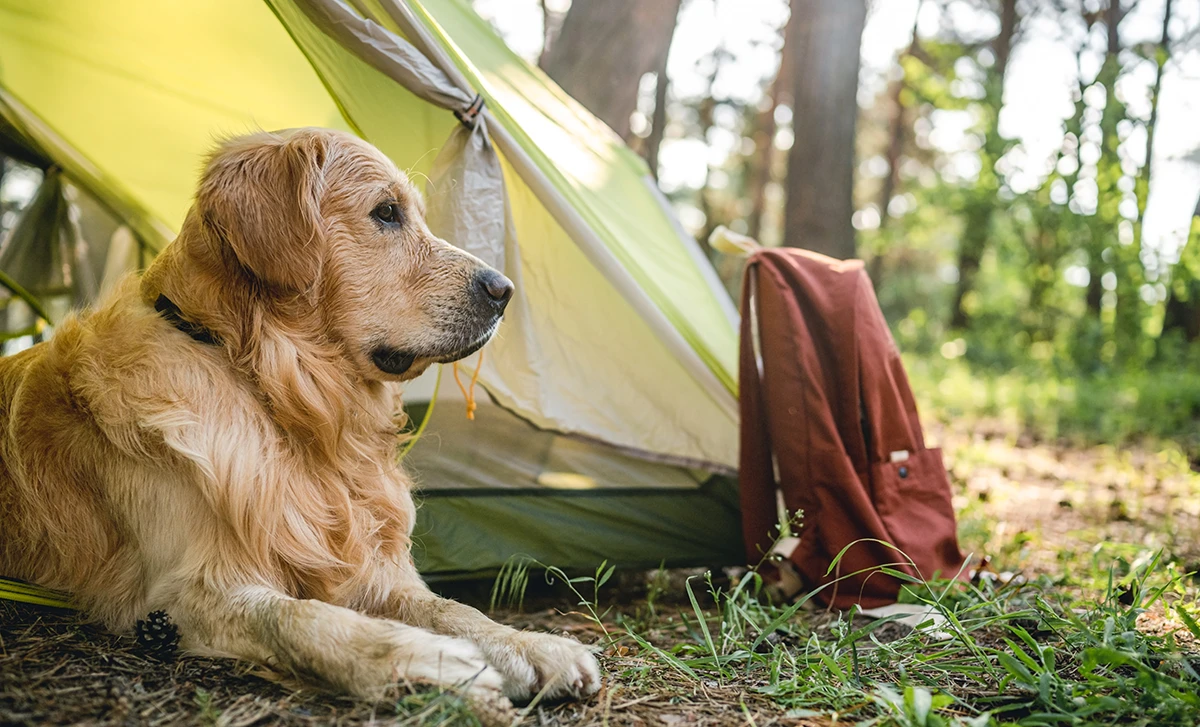
Camping with your dog can be a genuinely wonderful shared adventure, but it should not be improvised at the last minute. A safe and enjoyable trip depends on researching campground rules in advance, having the right training foundation, planning for hydration and weather, preparing basic first aid, and setting up a sleep situation that keeps your dog secure overnight.
Check rules before booking
Not every campground, trail, beach, or park allows dogs, and among those that do, the rules vary considerably. Some allow dogs only in certain areas, require proof of vaccination, restrict specific breeds, or enforce leash requirements even in nominally off-leash zones. Check these rules thoroughly before making a reservation.
The American Kennel Club’s outdoor dog travel guidance advises researching parks and wilderness areas in advance, reviewing all dog-specific regulations, keeping dogs leashed where required by rule or for safety, and packing out all pet waste. Rules exist to protect other campers, wildlife, and the natural environment.
If you are considering a national park trip with your dog, be aware that many parks significantly restrict where dogs are permitted. Most require leashed dogs on paved paths and campground areas but prohibit them on backcountry trails. Check the specific park’s pet policy on the NPS website before building your itinerary around hiking with your dog.
Pack for your dog like you pack for yourself
Bring a sturdy leash, a properly fitted collar or harness with current ID tags, food and treats, water, a collapsible bowl, waste bags, a towel, bedding familiar to your dog, tick and parasite prevention appropriate to the region, and a pet first-aid kit. Pack extra food in case weather, injury, or unexpected delays extend your trip beyond the planned length.
Do not rely on streams, lakes, or ponds as your dog’s primary water source. The AKC’s hiking with dogs tips warns that natural water sources may contain parasites, harmful algae, bacteria, or other pathogens that can cause serious illness in dogs. Carry enough clean water from home or a filtered source to meet your dog’s full hydration needs for each day.
Plan for sleep, wildlife, and weather
Decide how your dog will sleep before you arrive at the campsite. Options include inside the tent with you, in a crate inside the tent, secured on a long line at the campsite, or inside a vehicle with adequate ventilation. Never leave a dog unsupervised outside the tent overnight where they could encounter wildlife, get loose, or distress neighboring campers.
Wildlife encounters are a genuine concern in many camping areas. Keep food stored securely in bear boxes or vehicles as required, and do not allow your dog to approach, chase, or bark at wildlife. Even small wildlife encounters can result in injury to your dog from animal bites or contact with defensive sprays like those from skunks or porcupines.
Handling heat, cold, and terrain
Check the weather forecast for your camping area and plan accordingly. Dogs overheat faster than humans in warm, humid conditions and need shade, rest breaks, and plenty of water during warm-weather hikes. On cold nights, some dogs, particularly short-coated breeds, small dogs, and older dogs, benefit from a sleeping bag liner or blanket inside the tent.
Rocky, rooty, or sharp terrain can cause paw pad abrasions. Inspect your dog’s paws at the end of each hiking day and watch for limping during the hike. Dog boots can protect paws on particularly rough terrain but require gradual introduction before a camping trip if your dog has never worn them.
The best dog camping trip is planned around safety first. When your dog has the right gear, adequate water, clear rules, and secure rest, the adventure becomes genuinely enjoyable for both of you.
Post-camping health checks for your dog
After returning from a camping trip, perform a thorough physical check of your dog before they re-enter the house or interact with other animals. Check through the coat for ticks, particularly around the ears, between the toes, in the groin area, and around the collar line. Check paw pads for cuts, embedded debris, or swelling from the terrain. Rinse the coat if the dog swam in natural water sources.
Monitor your dog for symptoms in the days following a camping trip, including unusual fatigue, changes in appetite or drinking, vomiting, diarrhea, lameness, eye or nasal discharge, or any swelling or wounds you may have missed on initial inspection. Some infections acquired from wildlife, water, or insect bites do not produce obvious symptoms immediately. Prompt veterinary attention for any concerning post-trip symptoms is preferable to waiting and watching.
Dog-friendly campground selection tips
Not all campgrounds that permit dogs are equally good experiences for dogs. Sites in areas with very high wildlife activity, close proximity to other campsites that have dogs, limited shade for hot days, or particularly rough terrain may create challenges that a less experienced dog or owner is not prepared for. Researching campground reviews specifically from other dog owners can reveal practical details about the experience that general campground listings do not include.
Campgrounds in national forests and Bureau of Land Management lands often have more relaxed pet policies and more space between sites than busy national park campgrounds. State parks vary considerably in their pet policies and conditions. Calling ahead to the specific campground to ask about pet policies, leash rules, and any current concerns about wildlife activity or water conditions is always worth doing before a first visit with a dog.
Camping as a shared activity builds confidence in both directions
Dogs that camp regularly with their owners often develop noticeably greater confidence outdoors, with new environments, and in various weather conditions compared to dogs whose outdoor experiences are limited to neighborhood walks. The variety of sensory stimulation, terrain, wildlife sounds, and social situations that camping provides can contribute to a more adaptable, less reactive dog over time, provided the experiences are consistently positive and appropriately managed.
For owners, camping with a dog adds logistical complexity but also adds genuine richness to the outdoor experience. Dogs notice things humans overlook, respond to scents and sounds that remain invisible to us, and bring an infectious enthusiasm to outdoor exploration that can reinvigorate the experience for even regular campers. A well-prepared dog camping trip is one of the most enjoyable forms of outdoor recreation for the people and dogs who are suited to it.
 blogged