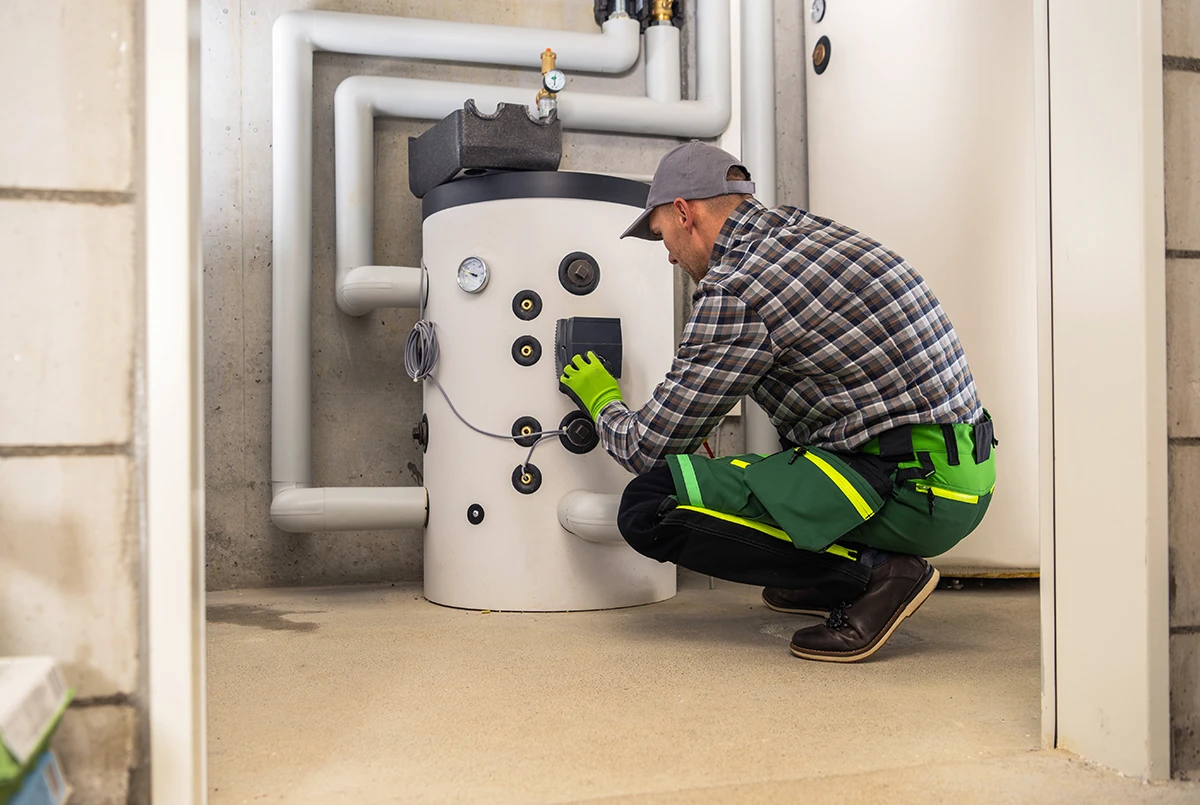
If you are replacing an aging heating system or building a new home, you will likely face a fundamental choice: install a heat pump or stick with a conventional furnace. This decision involves a mix of upfront cost, long-term operating costs, climate suitability, existing infrastructure in your home, and increasingly, access to federal and state incentives. It is one of the most consequential home energy decisions you can make, and the right answer depends significantly on your specific situation.
This guide explains how both systems work, compares them across the dimensions that matter most, and helps you think through which option makes sense for your home.
How a Furnace Works
A furnace is a combustion-based heating system that burns fuel — most commonly natural gas, though propane and oil furnaces also exist — to generate heat. The heat is transferred to air through a heat exchanger, and that warm air is distributed through your home’s ductwork by a blower fan. Gas furnaces are rated by Annual Fuel Utilization Efficiency (AFUE), which measures what percentage of the fuel consumed is converted to usable heat. High-efficiency gas furnaces can achieve AFUE ratings of 95 to 98 percent, meaning they waste very little of the fuel they burn.
How a Heat Pump Works
A heat pump does not generate heat by burning fuel — it moves heat from one place to another using electricity. In heating mode, it extracts heat energy from outdoor air (even cold air contains usable heat energy) and transfers it indoors. In cooling mode, it reverses the process, functioning exactly like an air conditioner. Because a heat pump is moving heat rather than creating it, it can deliver two to four units of heat energy for every unit of electrical energy it consumes — an efficiency ratio that no combustion system can match.
The efficiency of a heat pump in heating mode is expressed as a Coefficient of Performance (COP) or Heating Seasonal Performance Factor (HSPF). Modern heat pumps, particularly cold-climate models, can operate efficiently at outdoor temperatures as low as -15°F, greatly expanding the climates in which they are viable.
Key Comparison: Efficiency and Operating Costs
On a pure energy efficiency basis, heat pumps typically outperform gas furnaces significantly. A heat pump with a COP of 3.0 delivers three units of heat for one unit of electricity — equivalent to a 300% efficiency rating. No gas furnace can exceed 100% efficiency, and even the best achieve 95-98%.
However, operating cost depends not just on efficiency but on the relative prices of electricity and natural gas in your area. In regions where electricity is expensive relative to natural gas, the operating cost advantage of heat pumps may be smaller or even reversed compared to a high-efficiency gas furnace. In areas with lower electricity rates — particularly regions powered significantly by hydropower, nuclear, or renewable energy — heat pumps tend to provide clear savings. The U.S. Department of Energy’s heat pump overview provides guidance on evaluating these cost trade-offs.
Climate Considerations
Historically, heat pumps were considered ineffective in very cold climates because older models lost efficiency rapidly as temperatures dropped below freezing. Modern cold-climate heat pumps have largely overcome this limitation, maintaining useful efficiency at outdoor temperatures as low as -13°F to -22°F depending on the model. Even so, in climates with extended periods of extremely cold weather, a dual-fuel system — a heat pump paired with a gas furnace as a backup that activates below a certain temperature threshold — provides the best of both worlds.
In mild climates (most of the Southeast, Southwest, and Pacific Northwest), heat pumps are almost universally the more cost-effective heating and cooling choice. In cold northern climates like Minnesota, Michigan, or upstate New York, cold-climate models are viable but require more careful selection and sizing.
Upfront Costs
Installation costs vary significantly by region, home size, and existing infrastructure:
- Gas furnace: New equipment and installation typically range from $2,500 to $7,000 for a standard gas furnace, assuming existing ductwork and a gas line are already in place.
- Central heat pump: A ducted central heat pump (which also provides cooling) typically costs $4,000 to $8,000 installed. Homes without existing ductwork face additional costs of $5,000 to $10,000 or more for duct installation.
- Mini-split heat pump: Ductless mini-split systems are an excellent option for homes without ductwork. A single-zone system typically runs $2,000 to $5,000 installed; multi-zone systems covering several rooms cost more.
Federal Tax Credits and Incentives
The Inflation Reduction Act of 2022 created significant federal tax incentives for heat pump installations. Through 2032, homeowners can claim a federal tax credit of up to $2,000 per year for the installation of qualifying heat pumps. Additional upfront rebates may be available through state programs and utility companies. The Department of Energy’s Inflation Reduction Act resource page and the IRS’s Energy Efficient Home Improvement Credit page explain the current incentive structure in detail. These incentives significantly improve the financial case for heat pump adoption.
Air Conditioning: A Built-In Advantage for Heat Pumps
A central heat pump provides both heating and cooling in a single system. If you currently have a gas furnace and a separate central air conditioning system, replacing both with a single heat pump simplifies your system and may be cost-competitive with replacing just the furnace and air conditioner separately. When evaluating total costs, factor in the combined cost of your heating and cooling systems rather than just the heating system in isolation.
Environmental Considerations
Heat pumps produce no direct combustion emissions at the point of use. Their overall environmental impact depends on the carbon intensity of your local electricity grid. In areas with cleaner grids (high renewable or nuclear percentage), heat pumps have a significantly lower carbon footprint than gas furnaces. As grids continue to decarbonize over the coming decades, the environmental advantage of heat pumps over gas furnaces is expected to grow.
Indoor Air Quality
Gas combustion inside the home produces small amounts of nitrogen dioxide and, in cases of incomplete combustion or improper venting, carbon monoxide. Heat pumps have no combustion process and therefore do not introduce these byproducts into your living space. This is a meaningful advantage for households with members who have respiratory sensitivities.
Which System Is Right for You? A Decision Framework
- Lean toward a heat pump if: You live in a mild to moderate climate, your electricity rates are reasonable, you need to replace your air conditioner as well, you want to take advantage of federal tax credits, or you prefer a system with no combustion risk or emissions.
- Lean toward a gas furnace if: You live in a very cold climate and are not ready to invest in a cold-climate heat pump, your gas rates are very low relative to electricity rates, or your existing home infrastructure strongly favors a gas system and budget is a primary constraint.
- Consider a dual-fuel system if: You live in a cold climate but want the efficiency of a heat pump for most of the heating season, with a gas furnace backup for the coldest days.
Getting the Right Sizing
Whether you choose a heat pump or furnace, proper sizing by a qualified HVAC professional is essential. An oversized system short-cycles, wearing out faster and providing poor comfort. An undersized system runs constantly and cannot meet demand on the coldest days. A proper Manual J load calculation — the industry standard for HVAC sizing — should be performed before any new system is installed.
Both heat pumps and gas furnaces are well-proven technologies. The right choice comes down to your climate, your existing infrastructure, local energy prices, and how you weigh upfront cost against long-term operating savings and environmental impact. Taking the time to compare your specific options with the help of a qualified contractor will lead to a decision you will be satisfied with for the 15 to 20 years the system is in service.
 blogged