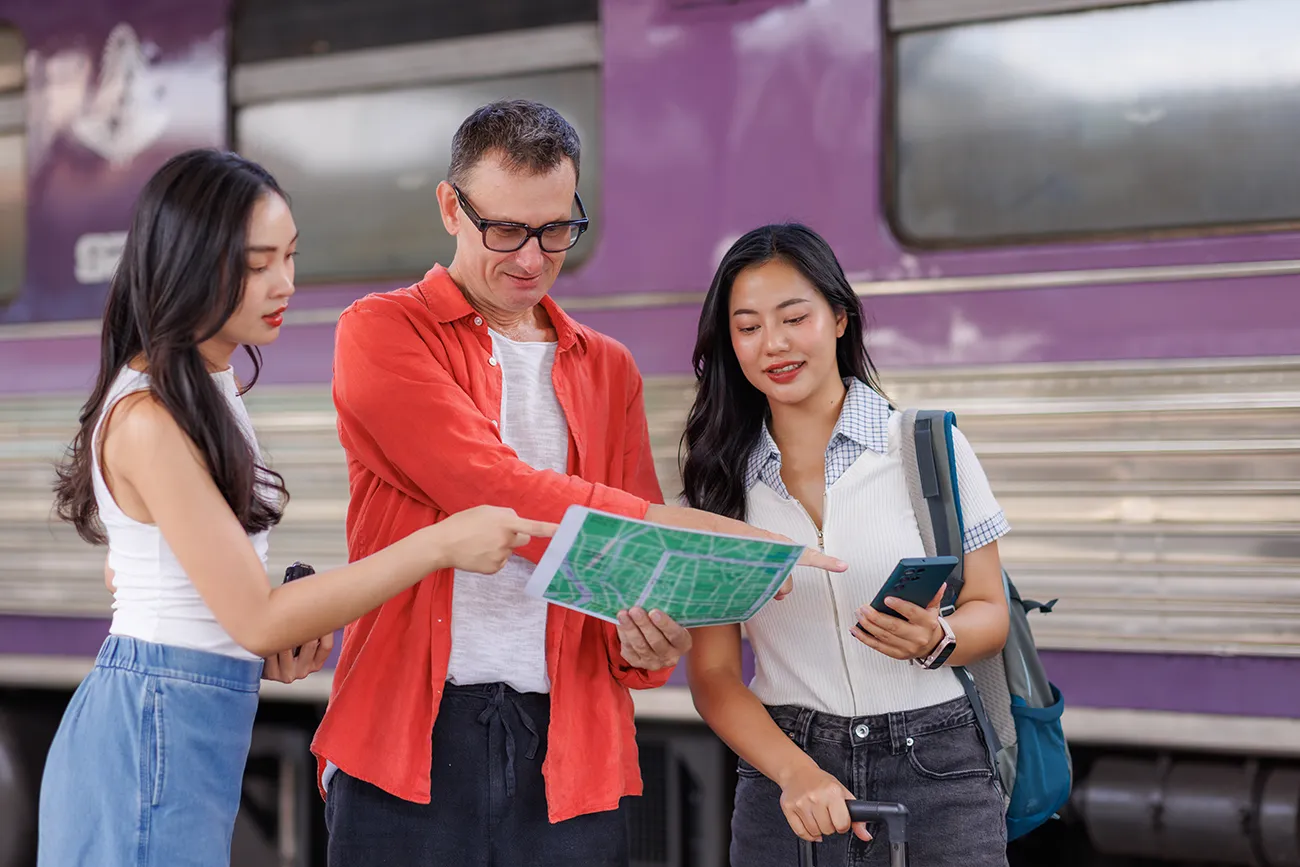
Planning a train travel trip is one of the most enjoyable ways to explore a region at a slower, more comfortable pace. Unlike air travel, trains drop you into city centers, offer generous legroom, and give you ever-changing scenery instead of a window seat full of clouds. Whether you are taking Amtrak across the United States or considering a rail pass through Europe, this guide covers everything from booking strategy to what to pack for a long-haul journey.
Why Train Travel Is Worth Considering
Train travel often wins on comfort, convenience, and experience — even if it rarely wins on speed for very long distances. Some practical advantages:
- City-center arrivals — major rail stations are typically in or near downtown, unlike airports, which can be 30–60 minutes from the city.
- No security theater — U.S. domestic trains do not require arriving 90 minutes early, removing your shoes, or surrendering your water bottle.
- More space — even coach seats on Amtrak are wider than most economy airline seats, and long-distance trains offer bedroom sleepers.
- Flexible tickets — many rail tickets allow changes at no fee or for a small fee, more generous than most airlines.
- Scenic routes — routes like the California Zephyr (Chicago to San Francisco), the Coast Starlight (Los Angeles to Seattle), and Eurostar through the Channel Tunnel are experiences in themselves.
Understanding Amtrak Routes and Ticket Types
Amtrak is the primary intercity rail network in the United States. It operates dozens of routes, from short regional corridors to long-haul overnight trains. Key ticket categories:
- Coach — the base fare class, assigned or unassigned seating, still more spacious than most airline economy seats.
- Business Class — wider seats, more legroom, available on select Northeast Corridor and other routes.
- Roomette — a private sleeper room for one or two passengers; includes meals in the dining car on long-distance routes.
- Bedroom — larger private room with a full-size lower bed and enclosed bathroom.
- Family Bedroom — larger still, with space for adults and children.
Prices vary significantly based on route, dates, and how far in advance you book. The Amtrak website lets you search flexible dates to find the best fares.
Rail Passes: When They Make Sense
For domestic U.S. travel, Amtrak offers a USA Rail Pass that covers a certain number of trips within a time window. These are not always the cheapest option — individual point-to-point tickets on popular routes can be less expensive than a pass if you only plan a few journeys. Run the math before buying.
For European travel, passes such as the Eurail Global Pass cover multiple countries and allow flexible travel across thousands of routes. Eurail passes work well for travelers who want spontaneous itineraries or plan to cover many countries in one trip. For travel within one country or on a very fixed itinerary, individual advance-purchase tickets often cost less. Research is essential before committing to a pass.
How to Book Train Tickets Strategically
Train ticket pricing generally rewards early booking, especially for sleeper rooms, which are limited in quantity. Tips:
- Book sleeper accommodations 2–4 months out for popular long-distance routes during peak seasons.
- Use flexible date search on the booking platform — traveling mid-week or outside summer peak can save significantly.
- Watch for sales — Amtrak runs periodic promotional sales, particularly for coach tickets.
- Join the loyalty program — Amtrak Guest Rewards earns points on purchases that can be redeemed for future travel.
- Check the cancellation policy before finalizing — most Amtrak tickets allow changes or refunds, though policies differ by fare type.
What to Pack for a Long Train Journey
Packing for train travel is less restrictive than flying, but a few essentials make the experience much more comfortable:
- Neck pillow and blanket — especially for overnight trips. Many trains are cool overnight.
- Noise-canceling headphones or earplugs — train cars can be noisy, especially at night in coach.
- Snacks and water — dining cars and café cars exist on most long-distance trains, but prices are higher than bringing your own food. Coach passengers especially benefit from packing snacks.
- Entertainment — download movies, podcasts, or ebooks. Wi-Fi on trains is often unreliable or unavailable in remote stretches.
- Power bank — outlets exist in most seating areas, but having your own backup is useful during busy journeys.
- Day bag — keep essentials like your ID, phone, charger, medications, and snacks in a bag that stays with you rather than in overhead storage.
Navigating Station Amenities and Boarding
Train boarding is more relaxed than air travel, but a few things are worth knowing:
- Arrive at the station 15–20 minutes early. Long-haul trains occasionally board 30 minutes before departure, especially at busy stations.
- At larger stations like Chicago Union Station or New York Penn Station, check the departure board for your platform — it may not be posted until 15–20 minutes before the train arrives.
- Checked baggage is available on most Amtrak routes at no extra charge for up to two bags — far more generous than most airlines.
- Many major stations have waiting lounges for sleeping car passengers; ask the station agent about this when you arrive.
Sleeping on Overnight Trains
Overnight trains are one of the most cost-efficient ways to travel: you cover hundreds of miles while sleeping, effectively saving a hotel night. Coach passengers save money but will need to sleep upright in their seat. Sleeper rooms are private and worth the cost for anyone who struggles to sleep sitting up or values privacy.
On Amtrak long-distance trains, sleeper fares typically include all meals in the dining car, making the premium feel more reasonable. The dining car on long-distance routes operates on a reservation system for dinner — ask your room attendant to sign you up for your preferred seating time when you board.
Traveling by Train in Europe
European rail is generally faster, more frequent, and more integrated than in the United States. High-speed trains connect major cities at speeds over 200 mph in many countries. The Man in Seat Sixty-One is a respected independent guide to European and worldwide rail travel, with practical booking advice and route details for travelers who want to do their research thoroughly.
Key distinctions for European rail:
- Seat reservations — many high-speed trains in France, Italy, and Spain require a seat reservation on top of your pass or ticket. This is not optional.
- Night trains — overnight services like the Nightjet network are expanding across Europe, connecting cities like Vienna, Amsterdam, Paris, and Rome overnight.
- Advance booking — book European high-speed trains (TGV, Eurostar, Thalys, Frecciarossa) 60–90 days in advance for the lowest fares.
Staying Safe and Comfortable on Long Journeys
Train travel is statistically very safe, but comfort and awareness matter on longer trips:
- Keep your valuables in your day bag and use it as a pillow or keep it on your person overnight in coach.
- Stretch and walk the car every hour or two on long journeys — train travel still involves extended sitting.
- Let someone know your itinerary, especially on multi-day routes through remote areas.
- Medications that need refrigeration should be disclosed to the dining car staff — they may be able to store them.
Train Travel Planning Checklist
- ☑ Research route options and compare point-to-point vs. rail pass pricing
- ☑ Book sleeper accommodations well in advance for peak routes
- ☑ Join the rail loyalty program
- ☑ Download entertainment before departure (do not count on Wi-Fi)
- ☑ Pack snacks, water, neck pillow, and a light blanket
- ☑ Confirm station arrival time and platform logistics
- ☑ Make dining car dinner reservations upon boarding
- ☑ Keep valuables in a day bag within reach at all times
Train travel rewards those who slow down and embrace the journey itself as part of the experience. With a bit of advance planning, it can be both more affordable and more memorable than flying, especially for medium-distance trips where the travel time difference is manageable.
 blogged